Wednesday, September 28, 2005

the curious incident of the non-existent patatar

In Desh, the tomato is known as tamatar, so why isn't the potato called patatar? Why is it instead called aaloo? Didn't tomato and potato both originally come from South America? How then did the tomato manage to keep its original name, and how did the potato lose its? Why did people start calling the potato aaloo, did the word refer to something else once upon a time? If so, what? How and when did tomatoes and potatoes first arrive in the subcontinent, and how did they subsequently become so wide-spread? And what was our food like before their arrival, how was it different from what we eat today?

* * *

The potato (fancy name: solanum tuberosum) and the tomato (solanum lycopersicum) go back together a long way. In fact, I don't think I will be able to have fries with ketchup again without thinking of old friends, and missing them all terribly. For that is what the two are.

Look at the similarity for classification purposes: the two fall within the same kingdom, division, class, order, family and genus. They must have once had a common ancestor - the legendary and exotic potamato. And being from the same family, they share the same first name too.

Then there's the shared history and culture. Both were originally native to South and Central America, living happy indigeneous lifestyles. Then towards the end of the 15th century, the Spanish arrived. Clearly more impressed with tomatoes and potatoes than with the local population, they were soon exporting the plants back to the motherland as well as to other colonies around the world.

There is a suggestion that their spread in Asia was via the Philippines, a Spanish colony from the late 16th century onwards. Maybe they came to Desh via Spain's European neighbour Portugal. After all, the Portuguese had a permanent settlement in India by early 16th century, and they were also quick to follow the Spanish into South America (in breach of the inter caetera ). Some say it was the British. Maybe there were multiple introductions, by different people at different times and places. We do not know for certain.

The tomato and potato had probably reached Desh by the middle or late 16th century - when Desh was ruled by Akbar the Great. They may have subsequently changed our cuisine and our diet, but noone seems to have noticed their arrival. We have records of Portuguese missionaries, Persian artists and judges, Bilayati traders and merchants, but the humble tomato and potato seems to have entered Desh unrecorded.

***

The word tamatar comes from tomato. The Online Etymology Dictionary notes:

TOMATO: 1753, earlier tomate (1604), from Sp. tomate (1554) from Nahuatl tomatl "a tomato," lit. "the swelling fruit," from tomana "to swell." Spelling probably influenced by potato (1565). A member of the nightshade family, which all contain poisonous alkaloids.

Again the parallel history of the two plants is seen, with the idea that our spelling for tomato came from that of the potato. So how did we get to potato?

POTATO: 1565, from Sp. patata, from Carib (Haiti) batata "sweet potato." Sweet potatoes were first to be introduced to Europe; in cultivation in Spain by mid-16c.; in Virginia by 1648. Early 16c. Port. traders carried the crop to all their shipping ports and the sweet potato was quickly adopted from Africa to India and Java. The name later (1597) was extended to the common white potato, from Peru, which was at first (mistakenly) called Virginia potato, or, because at first it was of minor importance compared to the sweet potato, bastard potato.

Poisons and bastard potatos! Suitably impressed, we arrive at the modern words potato and tomato. The question I want to proceed to is the transformation of a potato into an aaloo. Why are the potatoes of Desh called Aaloo? I consulted the wonderful Hobson-Jobson:

ALOO (p. 16) , s. Skt. -- H. ālū. This word is now used in Hindustani and other dialects for the 'potato.' The original Skt. is said to mean the esculent root Arum campanulatum.

So aaloo comes from sanskrit then. A quick confirmation at the Monier-Williams Sanskrit dictionary :

ola
ola or olla mfn. wet, damp L.
• (am), n. Arum Campanulatum L.


Ola to Aaloo? Maybe. But what's Arum Campanulatum anyhow?

An illegitmate name is what, according to the international code of botanical nomenclature. How strange and mysterious. But this is a matter for another day, and I ignore this mystery of illegitimacy and continue ploughing.

A paper on the plant names of Nepal talks about the edible bulb of the Arum lily, or Arum campanulatum. This is apparently eaten as a paste in times of hardship. So we seem to have an edible flower from Desh, which would wrap things up nicely, except isn't a bulb not a root! Sigh.

Hindunet's Saraswati Sindhu Civlization (?!) page has a dictionary which seems to say it is a kind of yam:

2063.Arum campanulatum: ce_n-ai amorphophallus campanulatus (Ta.); ce_na yam, arum campanulatum (Ma.); ke_ne tahiti arrowroot, an itchy root (Ka.); ke_n a kind of yam, arum campanulatum [amorphophallus campanutalus = arum campanulatum](DEDR 2022). Amorphophallus campanulatus: arsaghna (Skt.); jungli suran (M.); ol (B.); zaminkand (H.); karnaikilangu (Ta.); kanda (Te.); chena (Ma.); tuber: stomachic, tonic, restorative, carminative, in piles and dysentery, when fresh acts as an acrid stimulant and expectorant and much used in acute rheumatism (GIMP, p.16).


However, there is not much other information to be found, the reason seeming to be that arum was a 19th century misclassification and whatever it referred to is now going under a different name. So we are trying to work out what aaloo used to be, and all we know is it was arum so we must return to the mystery I was trying to avoid, and find out what arum campanulatum is and what has became of it.

arum campanulatum turns up on a plant database page about a somewhat dirty sounding group of plants - the "amorphophallus". We hit the jackpot right away:

Amorphophallus paeoniifolius (Dennst.) Nicolson var. campanulatus (Decne.) Sivad.

SYNONYM(S) : Amorphophallus campanulatus Blume, Amorphophallus campanulatus Decne., Amorphophallus campanulatus Roxb., Amorphophallus rex Prain, Arum campanulatum Roxb., nom. illeg.

ENGLISH : Elephant-yam, Leopard palm, Stanley's washtub, Telinga-potato, White-spotted giant arum.

NEPALESE : Ole (as A. campanulatus).


And here, at last, is the answer we have been looking for all along. The original aaloo of Desh was in fact the elephant yam. Native to the sub-continent, the elephant yam is still known as Ole in Nepal. When the potato first arrived in Desh, its appearance reminded locals of the elephant yam they were familiar with, and they started calling the potato aaloo. Cue to the present, where the potato has become so popular with us that we have long forgotten the original aaloo, its very name and identity lost to the parvenu from the Americas.

***

Aaloo: A Hindutva Perspective?

What horror. Foreign vegetables have arrived and taken the names and identitity of our native vegetables! Further, the potatoes are reproducing so heavily that they have taken over as the most populous vegetable, while elephant yams have become a minority in their own country. And did we mention the native vegetables had the name aaloo first! Historical injustices must be corrected, the potato must give up its claim on the name aaloo if it wants to stay in Desh!


***

Fortunately, in real life the hindu loony brigade are still unaware of the potato's controversial history. The same seems to be the case for their muslim counterparts:

Ubedullah Khan Azmi, a member of Parliament, and secretary of the Muslim Personal Law Conference, said: "It was the believers in the Qur'an who taught you the graces of life, taught you how to eat and drink. All you had before us were tomatoes and potatoes. What did you have? We brought jasmine, we brought frangipani. We gave the Taj Mahal, we gave the Red Fort. India was made India by us."


Arrival of Islam in subcontinent? Early 8th century. Arrival of tomatoes and potatoes? Late 16th century. Tsk tsk, these sophisticated rhetoricians intoxicated by the exuberance of their own verbosity! He should have instead said "what did they have before us? Zero!" It would have pleased him equally and he would have also been technically correct. And we could then have saluted the Desi ancients who thought up this remarkable metaphysical concept, which also describes so well Mr Azmi's knowledge of history. Zero.

***

The stillness of the empty field - 2

Continuing from I follow the smell of death:

The stillness of the empty field is interrupted, the chatter on the sides gives way to silence. Two improbable looking men - intruders - emerge from the direction of the rising sun, headed towards the centre of the maidan. They are wearing striped pajamas, the uniform of the pagalkhana, the crazy house. They are holding hands, one leading the other. The skin of the man in front is painted blue. The man behind him is a sikh, his features barely visible beneath a tangled profusion of untamed hair. Having reached the middle, they halt and look at the assembled crowds. The sardar seems to be in an agitated state, his gestures are frantic. The blue man turns to him and starts speaking softly , and as the sardar listens he calms down visibly. Curious, but also uncertain, I slowly walk towards the two of them.

"What does it matter Arjun," the man is saying in his gentle voice, "that these people are your kinsmen? Yes, they are your friends and brothers, the brothers and husbands of your sisters and aunts, the fathers of your children's friends, your own teachers and childhood companions. They are of the same blood as you. Kill them all anyway."

Monday, September 26, 2005

The mystery of paradise on earth


In the popular history of Desh, Kashmir is paradise lost. Talk about Kashmir to any Desi with literary pretensions, and invariably a time will come in the conversation when moist-eyed and overcome with emotion, he will unleash this persian couplet from his literary armoury:

Agar firdaus bar roo-e zameen ast,
Hameen ast-o hameen ast-o hameen ast.

If there is a paradise on earth,
this is it, this is it, this is it!

Unhappy school essays, newspaper articles, bombastic speeches, hyperbolic tourism brochures and advertising, this is the standard quotation to invoke for any piece of rubbish writing to do with Kashmir.

I have become very tired of this quote! Further, I have dark suspicions that it had originally nothing to do with Kashmir at all, that the poet meant someplace else, and that it was only adopted in the context of Kashmir much later. I would usually have let the matter rest with suspecting lazily without checking, but in recent times, there has been an epidemic of people correcting me when I suggested that the quote may have associations with Delhi, telling me I was quite mistaken and that it refers to Kashmir.

Irritated at being "corrected" (by people who I think are wrong), I have decided to uncover the truth, find out what this quote actually referred to, and trace the origin of its association with Kashmir.

Here goes:

The couplet was composed by the poet Amir Khusrau (1253-1325 ad). He was born in what is now UP, but came to Delhi at an early age. It appears he lived in Delhi all his life, serving in the royal courts in the days of the Delhi Sultanate. There does not seem to be any evidence he ever went to Kashmir, nor any reason to think he was talking of Kashmir in his couplet. Instead, the obvious inference would be either Delhi, the city he lived in, or Desh, the nation he belonged to and much of which was ruled by his royal masters.

Some people seem to think the couplet was written by a poet called "Firdaus". To clarify, there was a very famous Iranian poet Firdausi (who wrote Shahnama), but he has no relation to Khusrau. In urdu poetry, there is a tradition of the poet inserting their name into the last couplet of a poem, and some people may be getting confused when they see "firdaus" in the couplet. Firdaus as used in the poem has nothing to do with authoriship, it simply means Paradise ("the gardens of paradise"). [As an aside, the eytmology here is interesting, the english word paradise actually derives from persian, and if you look at the two words 'firdaus' and 'paradise' carefully, you can appreciate just how similar they are]

Now to go ahead in time to the age of the Mughals and to Delhi's Lal-Qila, the Red Fort, built in the 17th century by Shah Jahan. Within we find the magnificent Diwan-e-Khaas, the hall of special audience, and upon whose walls were inscribed the couplet in question. Again, it could be inferred to be a reference to the city, or more likely a reference to the kingdom of Desh, ruled by the man who sat on the throne in the Diwan-e-Khaas. Kashmir would appear to not only be non-appropos in this context, it can also be inferred that at the time there was certainly no exclusive association , if any, of the phrase with Kashmir.

So where the Kashmir link?

Google suggests various permutations.

1. Some people suggest outright that Khusrau or "Firdaus" was talking about Kashmir in saying these words.

2. Some suggest that it was in fact a Mughal who uttered these words when moved by the beauty of Kashmir. Some say it was Jahangir, others say it was Shah Jahan, someone even says it was "Shah Jahan' s Prime Minister".

Jahangir seems the most popular choice. Now there is a logic to this, for the Mughals were indeed known to be fond of Kashmir, heading up to the mountains during summer to escape the heat of the plains. And in his memoirs, the Tuzuk-i-Jahangiri, he certainly writes at length about Kashmir, praising its many charms and generally expressing his affection for the place. But does he quote Khusrau's popular line, is it referenced there? Alas, I do not know, I find no evidence one way or the other from the sources at hand, I have no access to the primary text, and yet I suspect it is so!

My theory then, is that Jahangir may have indeed remembered Khusrau's words and said them about Kashmir at a particularly awe-struck moment. I also take this to mean he was a man of learning and knew his poetry, rather than that it was an attempt by him to plagiarize Khusrau!

But for the moment, there is no evidence, and the connection of the verse with Kashmir remains unseen. And yet, there is some progress. Next time I hear a Desi starting to versofy in a discussion on Kashmir, I shall shake him by his collar until I have forced out either an admission of ignorance or gained a full and referenced explanation.

Satyamev Jayate.

Sunday, September 25, 2005

A Cricket Crisis

1. The Good News: Punjab - Bengal Friendship Amar Rahe!

Harbhajan comes to Ganguly's defense:

Harbhajan denied the accusation that Ganguly wasn't fit to captain the side, adding "...it may be the coach's [Chappell's] own observation but, as far as I am concerned, Ganguly has been proved as an excellent captain, which is evident from his match winning record."

The spinner also dismissed the notion that Ganguly was only interested in captaincy and creating difficulty among team members. "I have played for almost five years under the captaincy of Ganguly and never felt like that," he insisted. "In fact, he takes personal interest to boost each and every player during practice as well as during a match.

"Ganguly has rebuilt this team and whatever the team has achieved so far, credit goes to the captain."


Damn it, why couldn't all punjabi-bengali relations have been this good! Sigh...


2. Bad News - What a lazy bunch of bastards! Out, damned spots!

I have to say it, what a lazy bunch of bastards. Rotten spoiled whores who are happy being pimped for advertising contracts but burst into tears of indignation when being pushed to work harder on the cricket field and on their fitness. (examples here , here, and here , courtesy here) The one day team is already one of the worst in international cricket - there is no reason any of the players should feel overly secure of their place there - if they don't want to work hard, they can fuck off and leave.

The test team is hard to measure at the moment - they did well in the past, but they have barely played anything for a year . Where they are at will come out soon enough. If they turn out to be just as bad, then there is no reason to keep the rotten apples. Let's start again.

There are surely some players out there who are willing to push themselves to the limit instead of resting on their asses. At a guess - Dravid, Kaif, Tendulkar, Kumble, Pathan, Balaji strike me as being made of the right stuff. I hope others too - like Laxman and Sehwag.

Ganguly did great things for Team India, but he hasn't for a while. He's become the Duke of York - he led his men up the hill, and now he's leading them down it again. Let's not wait till we reach complete bottom.

Saturday, September 24, 2005


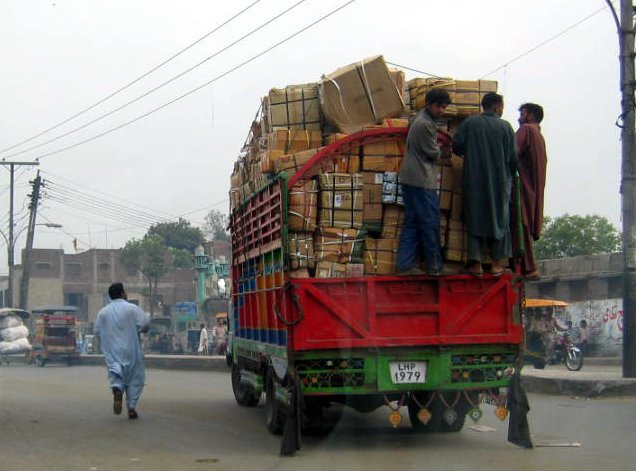
A truck in Lahore, 2004 Posted by Picasa

Why are Iranian kids eating turpentine?

I made this startling discovery at the "Persian mini-market", where packets marked Turpentine were placed next to boxes of halwa and turkish delight. Then the thick-browed man behind the counter solved the mystery. This is a brand of chewing gum, he explained.

* *

I was wandering through an ethnic ghetto of Blighty today. My white colleagues are scared of the place, but the shops there sell mangoes and lots of exotic fruit juices (I like lychee, guava, mango, and pomegrenate), so I like going there.


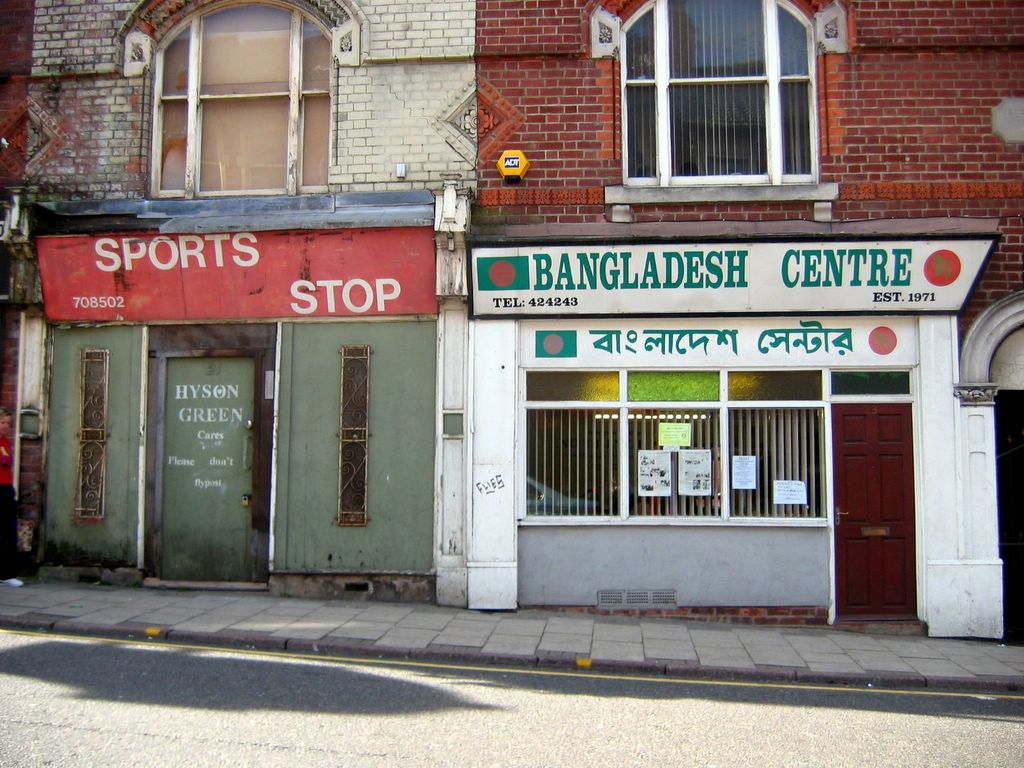
ghetto Posted by Picasa

Also of course there is the pleasure of being surrounded by so many cultural artifacts of Desh (for many of the ethnics are from Desh. There are others from Africa and Caribbean, there are Arabs and Persians, and poor white people too). The smells and sounds of Desh make me hearken for my country. I like how the Sikh Gurudwara is next to Faiz Convenience Store. I like how the old sikh gentleman buying melons exchanges courteous pleasantries in Punjabi with the studious young man with long-beard and skull cap behind the counter.

I dislike though the profusion of religious symbols. They are everywhere - hanging from the mirrors of cars, in the windows of the houses, on the names of the shops. I know people who choose which sweet-shop they visit according to which religion it identifies with. Do sweets have a religion I ask you? But sweet-shops here do. Maybe these people like their religion, maybe it gives them succour and comfort and pleasure, salvation even. But I personally have a long aversion to religion and its ability to divide people, have long been bitter about its consequences for Desh, and indeed for humanity in general, and as Faiz may have said - this ghetto is not the country I hearken for.

Yes, I know. The places we dream of are imaginary homelands. Sigh.

***

Notice in the photo above the promptness of the Bangladeshi community. Bangladesh, established 1971. Bangladesh Centre, also established 1971.

***

And yet, perhaps these assertions of religion are not proclamations of division, but of defiance. The mosques and gurudwaras of the ghetto are among the most unwelcoming buildings I have seen. The doors are closed, the gates are shut, the windows barred with metal. There are video cameras, and high walls, and warnings of CCTV and security systems in place. These are fortresses, not the open places of worship I am used to. But they reflect the reality the people of the ghetto live in, where even the houses of God are not safe from greed, malice and hate. In such an environment, perhaps the proclamation of religious identity should be seen as an act of courage and defiance, a defence of that aspect of their identity which they see as being most threatened.

***

With a "curry house" in even the smallest towns, they are starting to run out of original names. Run of the mill names with "Balti" and "Curry" in them proliferate. Curry 2000's name used to put me off while I was in the East End, but luckily I went in once and discovered that the guy's mother madekadhi once a fortnight. Restaurants like Imperial Balti, The Chand, Millenium Curry are assured my lifelong absence. Omar Khayyam's menu looks unpromising, but I do like the name. Anyway, I digress. Often these names will express where the owner is from - Indian Takeaway, they will say, or Bangladeshi Takeaway. Pride in regional identity is a fact of life, whether it be expressed at a country, state or city level. But I must admit I am still taken aback when I come across one proud owner's takeaway restaurant:

Ranchi
Bihari Takeaway

is the fantastic proclamation outside. Surely the first and only Bihari takeaway in the western world.

***

Tuesday, September 20, 2005

Miscellany from York

The city council organises free guided walks around York, and I decided to join one. There were about 30 visitors, from various corners of Europe and the Anglo-Saxon world. The guide was an ancient local woman called Hazel, who when she said she was going to die soon, got no disagreement from any of us.

She looked at her audience, all white with me the dash of brown, and with her eyes squarely on me, said, "Do we all understand English? I know it may not be a first language for some of you. But it's the only language I speak."

Small chatter followed. Then again turning to me, she says, "Clearly we have some visitors from overseas," encouraging me to reveal my foreign origins. As it was, I was the only one in the audience actually living in England, but poor Hazel had not yet caught up with the last 50 years of developments in her country.

That should give you some idea about York. It's an old town with lots of history, and one that maybe still lives a little in the past.

* * *

At the ruins of the 11th century St. Mary's Abbey, Hazel explained the importance and significance of the Catholic Church in those early days, and how it was then the only religion of the people of the british isles.

While it later became apparent that she was probably contrasting this to the later emergence of protestantism (which she viewed as a separate religion from catholocism, rather than a schism), I beg to point out what she missed - the Jews. In 1190, a mob in York decided to get rid of the town's Jewish population, matters eventually ending with the deaths of around 150 Jews, murdered or burned alive. It happened only a kilometer from the abbey too, and the ruins of the castle where the Jews hid for protection still remain too.

My point? Merely that if Christians of the time were busy persecuting Jews in England , why, there must have been some jews in england too.

***

In the tour group was an incredibly beautiful and divine smelling (i don't know what fragrance she was wearing, but i could distinguish it from every other smell in the crowd and around us, and I was aware of its presence the whole time) woman and her boyfriend. that is not in itself unusual, but this one had a remarkable resemblance to the girl who forgot me. She was a european version though, and many times during the walk she ended up standing right next to me, and i would just have to squeeze my eyes shut and concentrate on remembering this was a stranger, someone i didn't know and who didn't know me. and yet i couldn't help wonder, why didn't she recognise me, surely she must have once known a european version of me, surely these things happen with symmetry...

And then the tour ended, and we all went our separate ways, some of us marvelling at and troubled by the strange twists of the world, other seemingly unaware.

i follow the smell of death

I follow the smell of death until I reach the iron gates. They are open. On each side, cement walls extend into the darkness, decorated with broken glass and rings of barbed wire. There is a sign above the entrance. Arbeit Macht Frei: Work Shall Set You Free.

Once past the gates, I find myself at the edge of a great open stretch of land, a maidan. There seems to be a carnival going on – there are boys, eunuchs, men, and horses and elephants and camels too, divided into two groups facing each other, the air is filled with excited chatter and impatient grunting and stomping, and there are colourful banners and flags and uniforms everywhere. The aroma of death here is richly infused with the scent of spices, dirt, sweat, burning ghee, incense. I detect a tinge of the sweetness that is anticipation, but it is mixed with the damp odour of fear. In the center of the maidan, there is a vast emptiness separating the two sides, thirsty and longing to be filled.

Thursday, September 15, 2005

An Indian Heroine


Damn it - when we can celebrate the likes of the Jhansi Ki Rani as national heroines, pretend that the Lakshmi Sahgals of the INA were part of something worthwhile, and more recently hail as inspirational a various assortment of female odd-bags from disastrous leaders to long-legged beauty queens to weird nuns to dead astronauts, one thing becomes obvious. For a desh which some call the motherland, and which many would like to praise as Devi, we are kind of short on heroines.

Oh we have plenty of filmi ones, glamorous sexy and ravishing they all are too, but we want real women, real heroines, who were not only beautiful but brave, resourceful, and intelligent, the type to fight against tyranny and oppression, the type who would risk their necks for their cause if need be, a woman to admire and adore and draw inspiration from, that's what we want! On second thoughts, maybe we don't want real women after all, we want a super woman.

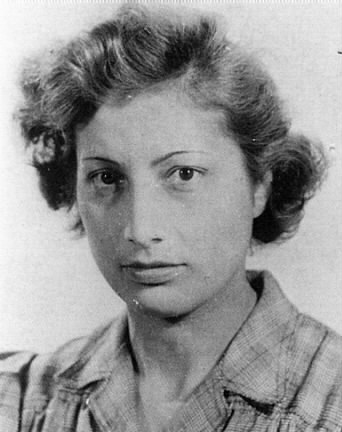
Luckily I have managed to find just such a woman. I present for your consideration Miss Noor Inayat Khan

What a life-story! First of all the perfect birth: Noor was born a princess royal! Not only that, she was a direct descendant of the legendary Tipu Sultan, a great hero of our National Mythology. To add to the mystique, her father the king was a sufi scholar, the head of an "international order of sufis"!

The young princess grew up glamorously in Paris, but of course remained a patriotic Indian through and through. Academically Brilliant (this is National Mythology not History, so same rules apply as for other NM figures) , the artistic and also socially conscious Noor studied both music and medicine ("they say when she sang, even the birds would became silent so they could listen to her" "her heart was moved by the plight of india's sick and poor and she resolved to become a doctor" some NM type manufactured quotes)

Just in her twenties, she turned to writing and with what success! By 25, her stories were being published in the internationally renowned Le Figaro, and she soon had a book out too - a collection of jataka stories (such cultural awareness! what good press opp. - a muslim girl telling 'hindu' jataka tales! such incomparable literary talent! and so beautiful too!)

As you can imagine, such a talented and successful woman was not short of eligible suitors. They say her admirers would rent out accommodation on her street just so that they could have a glimpse of her when she floated past (like the spring breeze), and they would sigh deeply! Her laughter was melodious like ringing church bells (which are actually not at all melodious and very loud, but imagine you have a church bell fetish), she smelled of roses and jasmine (she must have used ittar)

Anyway, back to the story. The fated year 1939, when dead zombie mental patients would aggress against the borders of Germania, with significant consequences for all. Noor our young beauty was only 25, yet when war broke out (a war between good and evil!), she knew what was at stake. This was a war for the freedom of the world, a war between humanity and inhumanity, where from the opposite trenches came the stench of the devil himself (the much older and idioter subhas chandra bose saw the same situation, sized it up, and went off to berlin to ally himself with adolf hitler. and he's our hero. for shame you bastards). Our Noor was wiser of course (women tend to be don't they? (this kind of sexist line always goes well with female audience)). She decided to get involved in the war effort in any way she could.

She left her life of comfort and signed up as a nurse with the red cross, making use of her medical training to save lives and care for the injured. her handsome courageous brother joined the airforce, flying dangerous sorties into the heart of darkness itself.

But women like Noor are not meant to exist at the periphery of life - they always end up in the centre. Noor had been training as a wireless operator. And having lived in Paris, she spoke flawless French. The British secret service tasked with covert missions overseas - the Special Operations Executive found out about her talents, and proposed a most dangerous mission - Would Noor be willing to become a Special Agent, and go to Nazi occupied Paris to work as a spy and radio operator behind enemy lines? Noor had an argument with her recruiter about India's freedom that day (See told you she was patriotic and all) - but though the English were wrong to colonize her land, she also knew there was a far worse evil that mankind needed to defeat. The brave girl went to Paris.

Codenamed Madeleine (an aside: I prefer macaroons. don't you?), Noor was an incredible success in Paris. Soon after her arrival, the Gestapo raided and captured the other british spies in the city. Noor was alone. But instead of going back now that the support network was gone (and she was ordered to return) she chose to stick it out, continuing to work in secret and relaying invaluable information to allied intelligence, as well as helping and enabling communications with the legendary* french resistance. Her courage, her bravery, her fearlessness, her long eyelashes!

For months she continued, taking increasing risks with the Gestapo bloodhounds on her trail, their noose growing tighter and tighter. But Noor stayed till the end - for the service of mankind and freedom, she was willing to risk everything. The odds had been against her from the start, but she had managed to survive and carry on, thanks to her wits, resourcefulness, courage and secret supply of comestics. Eventually the fateful day came, when there was a knock on the door, and it wasn't the milkman or the newspaperman or even the landlord, but the dreaded agents of the Gestapo.

Noor was captured and taken to Nazi Germany. There she was interrogated and tortured to get her to confess. Noor was resilient ("she spat in her interrogator's face") but in the dungeons of the third reich there were tools to break the courage (and bones) of any living being. Noor, an Indian heroine, died in a nazi concentration camp.

She was only 29 at the time, which means that there would never be any wrinkly pictures of her. She would always look heroic, beautiful, and well, young. You can't argue with good luck like that - she was destined to be a legend.

Posthumously, she was awarded the George Cross, Member of the Most Excellent Order of the British Empire, and the Croix du Guerre (with goldstar). But the country she loved best, the country her heart beat till its last for, that country barely knows her name. I said it earlier. For shame.

Le fin


N.B. This is National Mythology not a fact-finding mission. Noor's story was largely based on the material here , with a few other sites as well.

*legendary, as in a fictitious story.

Wednesday, September 14, 2005

Paris, paris!

The biggest palaces, the biggest boulevards, the biggest gateways, the biggest towers. The whole city is a monument to the phallic insecurity of the gallic male, and his need to compensate.


"Is this it?" Posted by Picasa


so when another small insecure man came to paris, his reaction was no surprise. "Is this it?" he asked. He had previously thought that Paris's size and grandeur might require a castration. But now he decided that his Berlin was going to be so much bigger and more imposing by the time he was done, that Paris would look small and crooked in comparison anyway. It would be better to let it remain, so everyone would see the proof that his city was the greater one!

Lucky for Paris that Hitler was feeling so confident.

Monday, September 12, 2005

Bacha-i-Lada?

M.Athar Ali in his essay Perception of India (from: Akbar and His India, Ed. Irfan Habib) says that Akbar "in 1563 confronting Adham Khan...used a hindi word of abuse still living with us." The source would appear to be Bayazid Bayat's Tazkira-i-Humayun Wa Akbar, which I have no recourse to.

That sounds pretty cool. But did he really say the B word? As per the Akbar-Nama , the official biography of Akbar, in 1562 Akbar calls Adham "bacha-i-lada", which the linked translation gives as son of a fool/bitch.

Issue 1: Has anyone heard of bacha-i-lada before? I have heard ullu-ka-bacha, but not this phrase. However, would be thrilled to learn if the phrase is indeed living and being used by people somewhere. Any ideas?

Issue 2: Adham Khan was killed by Akbar in 1562 (as per Akbar-Nama, and confirmed by other sources), so M.Athar Ali seems to have made at least one mistake in claiming the year as 1563. (Is the matter of its current usage another?)

Issue 3: Did Bayazid Bayat indeed record another different term of abuse used by Akbar for Adham? He may have, but it seems unlikely given the paucity of records generally that two different people were busy recording abuse that Akbar used in reference to specific individuals! And 1563 is clearly wrong - but is the mistake by Bayat, or Athar Ali?

Now given what I know so far, the best scenario I can hazard seems to be that in 1562, Akbar abused Adham thus: Bacha-i-Lada.

But what does Lada mean, what is this term of abuse? Athar Ali says it was abuse, the translation we have gives it as son of a fool/bitch.

Now Bacha means child. Son of is not problematic. But Lada?

Platt's Urdu Dictionary gives lada as:

lada (p. 0945)

H lADA lada [lad, q.v.+S. kH], adj. & s.m. (f. -i), Beloved, pet, darling; tenderly nurtured; -- a beloved object, a pet; a favourite; a lover, sweetheart; a bridegroom; -- a character in a play; -- raw indigo-plant (as it comes into the factory): -- ladi-ladi, Lover and beloved, lovers; bridegroom and bride.

Shakespear doesn't contain it at all.

So short of correction or verification from another source, lada seems to literally translate as beloved or pet or even lover! Son of a pet? Son of a lover? How does under this translation bacha-i-lada become a term of abuse? And one that is still alive?

The questions then are these. What does lada mean, and what does bacha-i-lada mean? Is it a term of abuse? Is that what Bayazid Bayat's book says? If not, what does it say? And is this really a living phrase?

Personally I am disappointed Akbar didn't (probably) call him behenchod. It seemed so appropriate that one of the greatest kings of Desh should favour the same term of abuse hundreds of years ago that remains most popular with the people of Desh today.

ps: Could there be a typo, could this be the word?:

lalā

s.m. A boy; dear boy, darling; -- a dolt, blockhead, fool (=S. laṭa); -- adj. (f. -ī), Impotent: -- Badā'ūṅ-kā lalā, A Badā'uṅ fool; a great dolt or blockhead (cf. the Eng. `Essex calf').

If so, Shakespear unfortunately again fails to offer confirmation.

pps: Could lala in fact be ladla? That would make sense as being a term still in use, and also as being perhaps the correct spelling of 'lada' (a case of a missed letter). But the big problem: is ladla then a term of abuse?

Sunday, September 11, 2005

An anniversary, some lazy thinking and a conversation

It’s the fourth anniversary of ‘violent extremism’ striking the towers. Violent extremism? I read somewhere (in Slate for instance) that the Empire is no longer fighting a war on terror, instead, it’s now a struggle against violent extremism. Four years on, there seems to be no shortage of confused, and confusing, thinking on whos and whys of ‘violent extremism’ (or Jihad International, or Islamofascism – what’s in a name, call bomb by any other name and it will still cause havoc).

Confused thinking, however, we shouldn’t mind. After all, it’s hard to understand why for instance a cricket-lover would blow themselves up right before the greatest Ashes series ever. There are theories. Many theories. Some theorists seem to be less confused than others. And in general, it seems, those who profess the least confusion are also the least convincing. But may be that’s my shortcoming as a reader. And as for these theories being confusing, that’s surely my shortcoming as a reader.

So confused and confusing thinking we are okay with. We shouldn’t however excuse lazy thinking. Not on a subject this sensitive, appearing on a publication catering for the Imperial elite, and coming from someone who should know better. Salman Rushdie wrote a piece in the Washington Post a few weeks ago, which has then been reprinted across the Anglophone world. The right time for an Islamic reformation calls for, yes you guessed it, an ‘Islamic reformation’.
Rushdie begins with the example of a ‘moderate’ British Muslim grandee who thought that death sentence was a light punishment for writing that evil book. This he argues is an example of how the community leaders have caused ‘inward-turned lives of near-segregation from the wider population’. That this ghettoisation is a problem I can understand. And it is very important to debate how a liberal state and society should approach it. But how does it relate to this ‘Islamic reformism’? Let me quote him:
The deeper alienations that lead to terrorism may have their roots in these young men's objections to events in Iraq or elsewhere, but the closed communities of some traditional Western Muslims are places in which young men's alienations can easily deepen.

And what are these traditions? Again, this is what he says:
…..many whose views on women's rights are antediluvian, who think of homosexuality as ungodly, who have little time for real freedom of expression, who routinely express anti-Semitic views…..

This brings to a diversion, a conversation I had with a Desi sister. Sister? Mother of two and the homely demeanor makes aunty a more apt address, but she is only in her mid‑30s, so calling her an aunty would undoubtedly cause offence. This sister‑who‑looks‑like‑an‑aunty became interested in politics late last year. She was against the re-election of Bush, largely because of Iraq, but also because of Bush’s faith. Curious, I asked her which bit of Bush’s faith she disagreed with. My friend said surely a Christian fundamentalist can’t be good for Muslims. I persisted, asking her what exactly about Bush’s beliefs bothered her. By the end of our conversation, my naïve friend was all confused to learn that Bush wanted to ban gay marriage, outlaw abortion, and didn’t believe in evolution. If Bush and his supporters had these views, views good Muslims like her totally endorsed, then she wondered what the fuss was about. Why do they hate us, she said. My friend lives in one of those inward-looking communities that Rushdie decries. And these communities pose problem. But what about those moral voters of Ohio?

Anyway, back to Rushdie. So Rushdie bemoans insularity of Muslim communities living in West. And his solution is ‘Islamic reformation’. Now this is just lazy thinking. Why? Because an ‘Islamic reformation’ is just not possible. Islam, or at least Sunni Islam, does not have an organized clergy. There is no Islamic Pope, nor an Archbishop of Mecca. It is not as if a council of mullahs can sit and issue an official injunction for or against gay marriage. Your interpretation of Quran is yours and yours alone. This is why Islam didn’t have a reformation! And it’s not as if Rushdie doesn’t know this. Problems over interpreting the Quran, wasn’t that a major theme of that book that caused Rushdie so much grief?

That many Muslims, most Muslims, have these odd views about sexuality and women’s roles (and Jews or people who are different from them) is true. That these odd views can pose problem to a liberal society is also true. However, these odd views are shared by many religious people of other faiths, faiths that could and did have ‘reformation’. That Rushdie skirts over all these and promotes what he must know to be a non-solution is unforgivably lazy thinking.

Saturday, September 10, 2005


get stuffed, my true love said to me Posted by Picasa

Friday, September 09, 2005


sydney, a lifetime ago Posted by Picasa

Thursday, September 08, 2005


candlestick Posted by Picasa

meeting with a one-armed sufi yogi philisopher

Like Mr Shakil from the brilliant first page of Shame, I too admit to deserving to be consigned to some border outpost of Jahannum, in my case for failing to write about the various topics that deserve coverage, and then compounding the error by succumbing to lazy recountings of ordinary matters.

***

Attending one of those otherwise pointless tax courses in london (the train was at 6:23, and i only woke up at 6:00 am when the taxi driver called to say he was downstairs), i had an enjoyable conversation about urdu poetry and other miscellany with a heavily accented one-armed pakistani gentleman.

He disliked Faiz, thought Sahir was difficult to understand, Ghalib easier, Iqbal at least wrote about worthwhile topics, but used too much persian, but it was okay when Hafeez Jalandhari used it for the anthem. With the standard Pakistani analysis, he highlighted the period
of one pakistan military dictator as a time of prosperity, in contrast to the low days of democracy. The only exception was that the dictator he was crediting was the rather universally condemned Zia-ul-Haq, instead of say 'Kemal' Musharraf, or the popular evergreen even in his
tomb Ayub Khan, he of the democracy is not suited for the genius of the Pakistani people.

The one armed man rejected the idea that there is such a thing as a 'sufi tradition' (a sufi is against all traditions apparently), sought to distinguish happiness from satisfaction, and explained the common identity of yogis and sufis, counting himself as one of the group, after explaining that no sufi would call himself as one. There was no point in writing for the people, because they had short-term memories, and were perhaps consequently beyond redemption. Poetry should be about philosophy and religion, not about revolution or the nation or freedom. Freedom was overrated anyway. One would be better off writing about say Darwin and criticise the theory of evolution, instead of criticising the likes of Zia-ul-Haq. After all, Darwin is more popular, and his theory causes much more damage. At this point in time I started dreaming I was Gibreel Farishta sitting next to the American preacher in Satanic
Verses, who said something to this effect: "Why are the youth of our nation depressed? You'd be depressed too if you thought your grand-daddy was a monkey!"

Monday, September 05, 2005


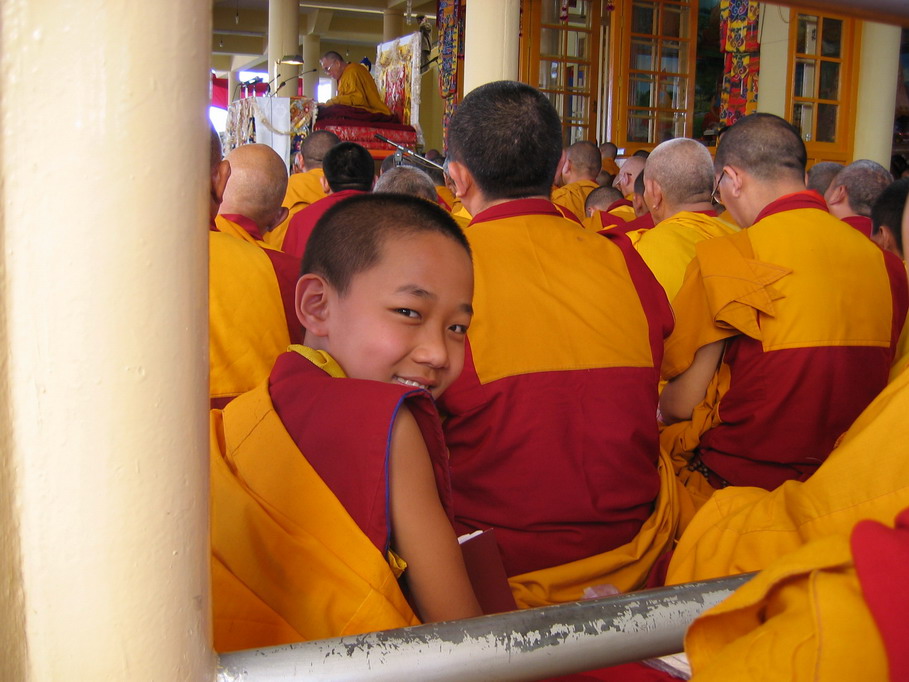
Dalai Lama gives a teaching, but one young monk is distracted (McleodGanj 2004) Posted by Picasa

Sunday, September 04, 2005

On Food

Food is an often overlooked part of our identity. When we think of who we are, we talk of nationality, religion, community, caste, sect, ethnicity. But what of food!

When a Punjabi overseas hears of makki di roti and sarson da saag does his heart not hearken for his native land? In university, when we grumbled about lecturers from Sonar Bangla, did fish not figure prominently in the nicknames and rude verse we created? And then later, would I not discover that when some Bengalis proudly assert their identity, they use the same phrase those mocking them did, and say: "we are fish-eaters!"

Do most Muslims I know not have a dietary obsession, where injunctions concerning drugs, alcohol, modesty, sexual propriety - all can be ignored, but the one great taboo is Pork? And in Desh, has not beef-eating conversely become almost an article of faith, the right to eat cow being one of the reasons put forward to necessitate division of countries and people!

Our Tibetan neighbours do not identify membership of their community on the basis of language, or religion, though we may think so. For them, the answer to who is a Tibetan is this: A tibetan is one who eats tsampa (roasted barley flour). When the imperialist Han Chinese invaded, they too followed the idea of identity by diet, asserting the superiority of rice-eaters over tsampa-eaters. And in occupied Tibet today, that's how identity and communities are divided, by what is served at the dinner table. Food matters.

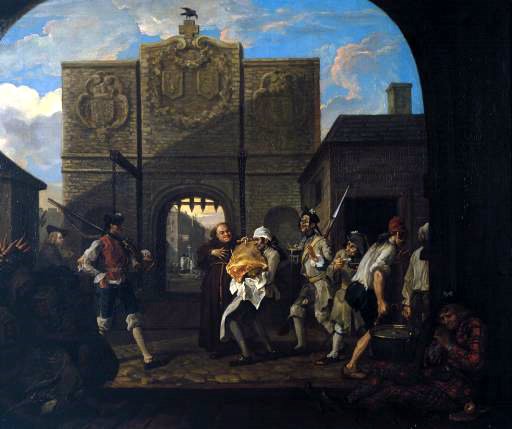
Over here in Europe, the French contemptously refer to the English as les rosbifs - the roastbeef. If the name's meant to give offense, then it's a dismal failure. The men tasked with guarding the the Crown Jewels (yes, yes, including the kohinoor, the mountain of light, which Desis tend to get so excited about) are famously known as the beefeaters. And one of the proudest statements of English identity comes from the patriotic artist William Hogarth, whose most famous work was known as - quite appropriately - The Roast Beef of Old England.


This entertaining painting is set in France, and it shows on one hand, snivelling and scrawny French soldiers, subsisting on meager offerings like watery soup - and on the other, the substantial and nutritious diet of the lads of Blighty, who feast on fine Roast Beef.

Sequel to this to follow, maybe.

Saturday, September 03, 2005

The Random Traveller

Dividing the World

Today, when we think something is nonsense, we call it "bull". When the pope issues a formal written declaration, it is known as a "papal bull".

A very famous papal bull called the Inter Caetera was issued in May 1493 by Pope Alexander VI. This translates as Among Others, as if the document was dealing with minor administrative amendments. In reality, it was a document of world domination and division. The Bull divided the whole world between the kingdoms of Spain and Portugal. An imaginary line was drawn through the Atlantic. All lands to the west of the line were to go to Spain, and all lands to the east, to Portugal. This you will note, would have made all of Desh Portuguese territory, and given their fanatical tendencies, there is no doubt they would have followed a policy of persecution and inquisition until we were all Roman Catholics and had names like Anthony Gonsalves. Which, mind you, is a very fine name indeed, but Anthony-Anthony-Anthony doesn't have quite the same ring to it.

If I may note as an aside, the Jews have in the past been accused of an agenda of world domination, of authoring documents with sinister (and cool!) names like "Protocols of the Elders of Zion". But the Pope's version of this is basically called Among Other Things? A, they need better and more creative titles, and B, if world conquest falls among other things, what were the other more important things on the Agenda?

Today the shape of the world is different. Amrika rules the world, and the Pope rules all of Vatican City. And where once Spain and Portugal divided the world between themselves, today I like, for categorisation purposes only, to divide the cities of Europe I visit between the different communities of Desh. Gujaratis and Tamils figure no doubt, and Kashmiris too, but the Spain and Portugal of my count are the Punjabis and Bengalis, who dominate the diasporic population. So far, between the two of them, allocation goes like this:

Bengalis get: London, Rome
Punjabis get: Paris, Barcelona, Amsterdam
Unconquered for now: Dublin, Prague, Edinburgh, Berlin

***

I have recently received a document written in six languages: English of course, and five languages of Desh: Bengali, Gujarati, Hindi, Punjabi and Urdu. A communication from the Government of India perhaps? No sir. It's a booklet on local elections from the city council of Nottingham.

Thursday, September 01, 2005

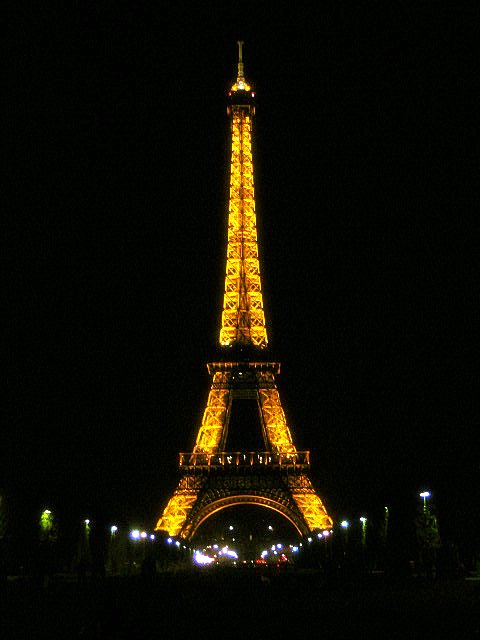
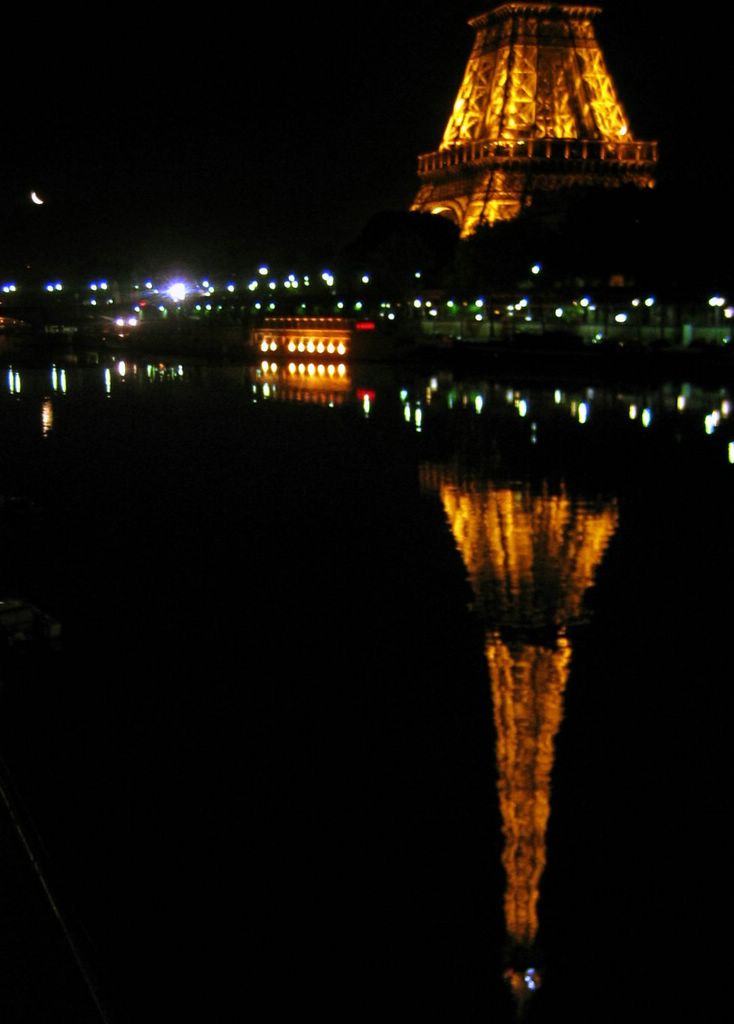
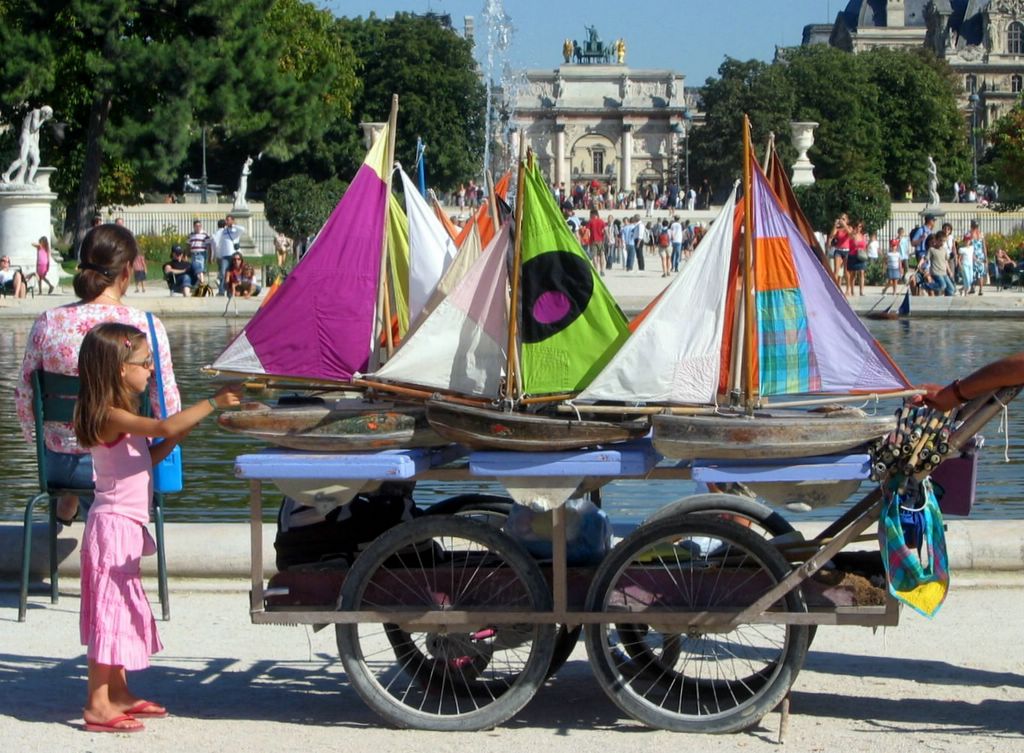
paris


Posted by Picasa


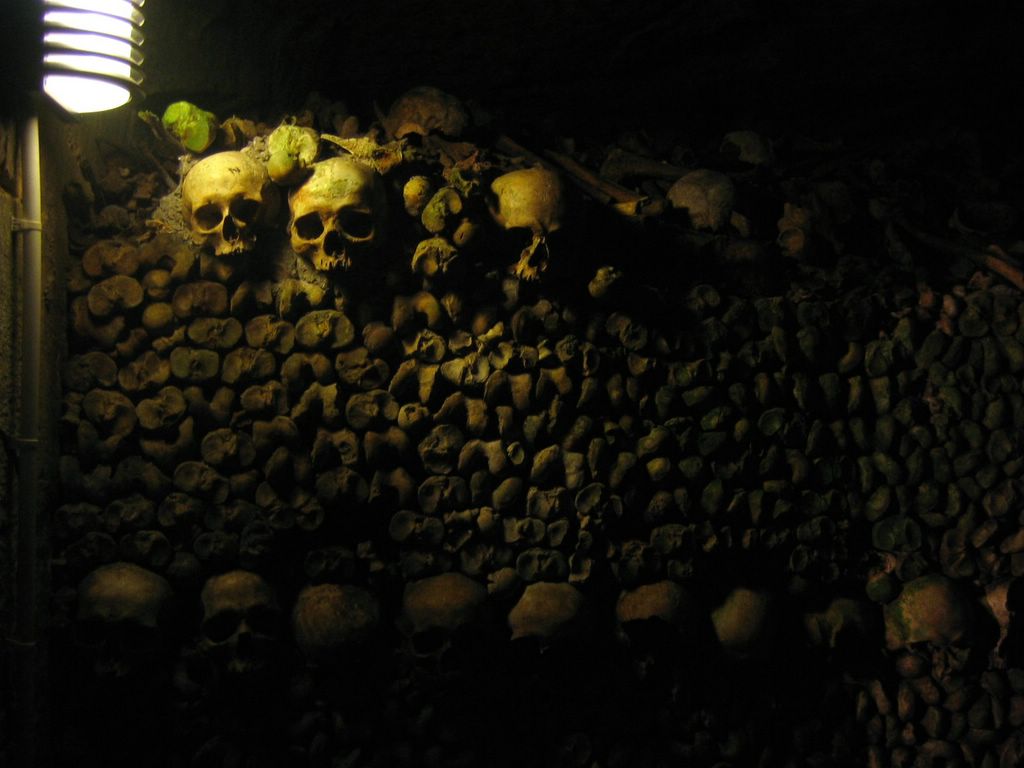
memento mori Posted by Picasa


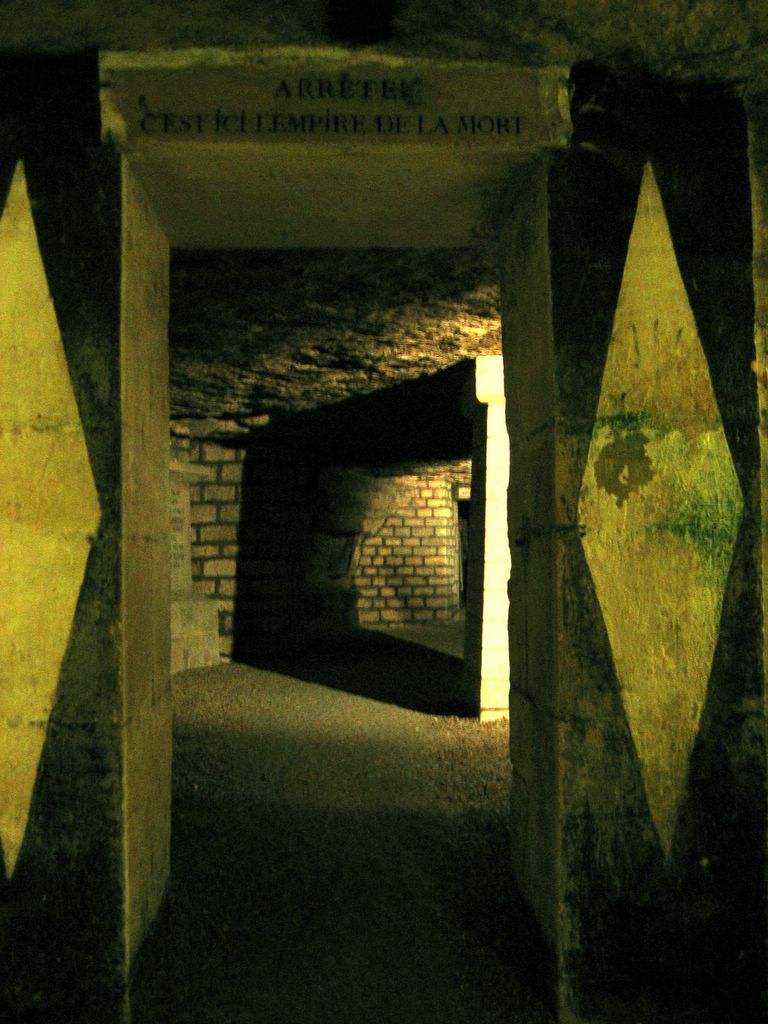
Arrete! C'est ici l'empire de la mort. Posted by Picasa


. Posted by Picasa