Showing posts with label religion. Show all posts

Tuesday, August 05, 2008

Jesus look-alike

This looks like Jesus, doesn't it?

Well, perhaps not entirely! Poseidon, Greek God of the Sea, and perhaps one of the inspirations for our modern image of Jesus, seen flaunting his stuff in an ancient mosaic at the Louvre Museum in Paris.

Wednesday, July 11, 2007

Dictator 1 - Mullahs 0

Maulana Abdul Aziz of Lal Masjid had previously been extremely vocal about the willingness of his followers to become martyrs for the cause. But when the time came, the Mullah himself proved a little less eager, preferring to try and sneak away pretending to be a woman, dressed in a burqa and carrying a handbag.

As the Mullah turned from a figure of awe into an object of ridicule, the Dictator's Government took the opportunity to humiliate their opponents further, parading this firebrand Jihadi leader on PTV wearing a burqa, a symbolic castration of this self appointed warrior of the faith.

Meanwhile, Al-Qaeda's No.2 man Ayman Al-Zawahari is pretty pissed off to see this humiliation of his Pakistani allies. He had some nasty things to say about General Musharraf in his latest video, including the following rant:

I talk to you today on the occasion of the criminal aggression carried out by Musharraf, his army and his security organs - the Crusaders' hunting dogs - against Lal Masjid in Islamabad, and on the occasion of the dirty, despicable crime committed by Pakistani military intelligence - at the orders of Musharraf - against Maulana Abdul Aziz Ghazi when it showed him on television in women's dress.

(...) Musharraf and his hunting dogs have rubbed your honor in the dirt in the service of the Crusaders and the Jews, and if you don't retaliate for your honor, Musharraf won't spare any of you, and won't stop until he eradicates Islam from Pakistan. Lowly Musharraf, who has sold his honor and religion to the Crusaders and Jews, is arrogant with you in the extreme and regards you with the utmost contempt, and treats you like animals and dogs, and only is satisfied by portraying you in the lowliest and most despicable light.

Sunday, July 08, 2007


East London Mosque


On the left is the 'Main Entrance for Men'. On the right, the 'Main Entrance for Women'.

Wednesday, February 21, 2007

Of Maududi and Munir

Most readers of these scribbles would know that a global bestseller has Jesus escaping Judea and settling in France. This book has caused many in Firangi lands to wonder about their religion. It has also caused commotion in Desh — in its great secular tradition, India found the idea objectionable enough to censor the movie version. This is odd, because the idea that Jesus escaped from the Roman punishment field alive and in flesh to settle elsewhere is not new in Desh. Why, there is even a tomb of the man in Kashmir.

Yes, that’s right. There is a tomb, called Roza Bal, in Srinagar where buried is a man alleged to be the son of Mariam of Nazareth, a false messiah to the Jews, part of the Divine Trinity to the Christians and a prophet to the Muslims.

So how come in a continent of one and a quarter billion people and one-third of a billion gods/demi‑gods/god-men this place does not attract thousands of devotees everyday? Perhaps this particular tomb had no sponsor to market it as a shrine. Perhaps Jesus, after escaping from the Levant, had no chela to peddle his divine connection to Desis. But that can’t be right, because there is a sect that actively sells the idea of Jesus dying in the Paradise on Earth instead of ascending to Heaven. I am talking about Ahmadiyas/Qadianis.

Ahmadiyas get their name from the founder of their cult — one Mirza Ghulam Ahmad of Qadian (hence Qadiani), Indian Punjab. These guys believe that Mirza Ahmad is the promised Messiah of the three Abrahamaic faiths. While there is a dispute among his followers about whether Mirza Sahib was a prophet or a mere learned reformer, there is no doubt among them that Jesus had indeed died in Kashmir in the early 2nd century CE.

Mirza Ahmad started his god-man career in the 1890s. He preached that the British Raj was the Anti‑Christ/Dajjal. He talked about overthrowing the empire and freeing his people. Punjab has the most productive farm sector in Desh today, but in the 1890s it experienced droughts, a famine and a depression. One would have thought that in that time of desperation, Ahmad’s messianic message would massively move the mass imagination. This, however, did not happen. Ahmadiyas are not a major religious group even in Punjab, let alone elsewhere in Desh.

And this, perhaps, is a greater puzzle than why the Roza Bal is not better known?

It’s not as if strange people who heard voices had a difficulty finding followers in Punjab, or indeed elsewhere in Desh. After all, those railing against another empire a few centuries earlier found many followers, enough to have their own shrine in Amritsar affecting Desi history in the 1980s. And elsewhere in Desh and beyond, god-men from Prince Siddhartha to Bhagwan Rajnish had flourished. So why did Ahmad flop?

Perhaps because Ahmad marketed his cult to the wrong audience. You see, Muslims are not all that receptive to new ideas when it comes to religion — at least that’s the orientalist line many in the Firangi land run these days. But we know that in Desh that’s mostly rubbish. Desi Muslims have their fair share of god-men, pirs, Sufi mystics, other crackpots who seek a carnal relationship with their maker (in the words of a nocturne). Why, then, could Ahmad not whip up a following to match those of the Qalandars of Sind, Shah Jalal of Sylhet, and Khawajas and Chishtis of Delhi and Ajmer?

I am no expert, so I’ll give the authoritative commentary of the completely unqualified. I think where Ahmad is different from other assorted god-sellers/lovers is that he challenged the merchant of Mecca monopoly on the last direct line to the Lord. You see, none of the other mystics claimed to have received any message (verbal or written) from you know who. Ahmad claimed to have done exactly that. It seems that anything to do with the Prophet and you’re in trouble, and Ahmad claimed he was at the least a semi-prophet.

I think this is why Ahmad’s cult flopped. There are reasons to think that this conjecture is plausible. The first intra-Muslim sectarian violence in Pakistan was against the Ahmadiyas in the early 1950s. Maulana Maududi, writer of semi-intelligent rant passing as the interpretation of the Quran and founder of Jamaat-e-Islami, issued a fatwa that Ahmadiyas are the enemy of Islam because of their heretical views on the last prophet, and mob burnt down their houses and mosques in Lahore. Order was restored by the Army (this was the first time that gallant institution saved our hacked off lands). More recently, Bangladesh’s supposedly secular politicians entertained passing a law that would, in effect, brand Ahmadiyas as non-Muslims. In Pakistan, Ahmadiyas are officially disqualified as Muslims.

In a perfect world, this law would be as significant as the conference that deliberated on how one bows to Mecca while in space. But in Pakistan (though fortunately not in Bangladesh), non-Muslims are denied the same rights as Muslims, so the distinction matters — on the other hand, since in Pakistan no one has any right to speak of, maybe the distinction doesn’t matter. Either way, let me tell you what Justice Munir found five decades ago on the definition of a Muslim.

In 1953, after Maududi’s followers did their worst and the Army its best, two judges were appointed to write a report on what the government should do about defining a Muslim. The judges, Munir and Kiyani, interviewed all the leading Islamic scholars of Desh and beyond. The result was a 350 page report that contains these words.

The result…, however has been anything but satisfactory and if considerable confusion exists in the minds of our ulama on such a simple matter, one can easily imagine what the differences on more complicated matters will be…. Keeping view the several different definitions given by the ulama, need we make any comment except that no two learned divines are agreed on this fundamental. If we attempt our own definition as each learned divine has done and that definition differs from that given by all others, we unanimously go out of the fold of Islam. And if we adopt the definition given by any one of the Ulama, we remain Muslims according to the view of that alim, but kafirs according to the definitions of everyone else.

The report is one of the most cogent argument against an Islamic Rpeublic I've ever read. Oh how one wishes that Munir triumphed over Maududi.

Monday, November 20, 2006

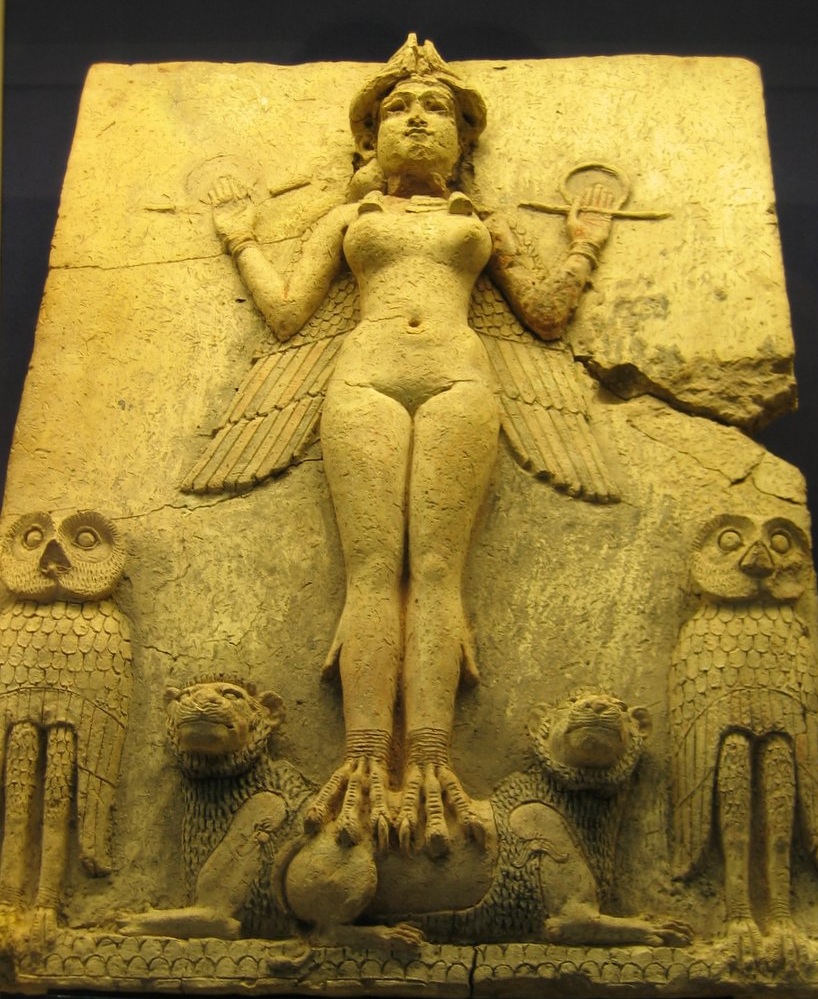
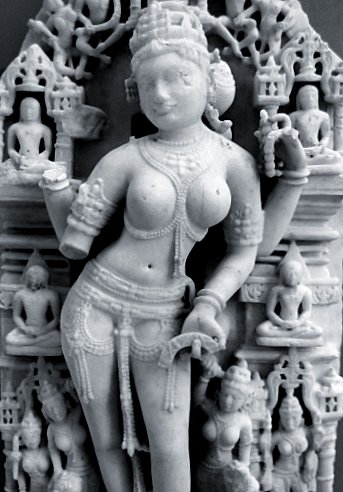
goddesses


Some religions are very attractively packaged. Who wouldn't want to be a believer?!

Sunday, November 05, 2006

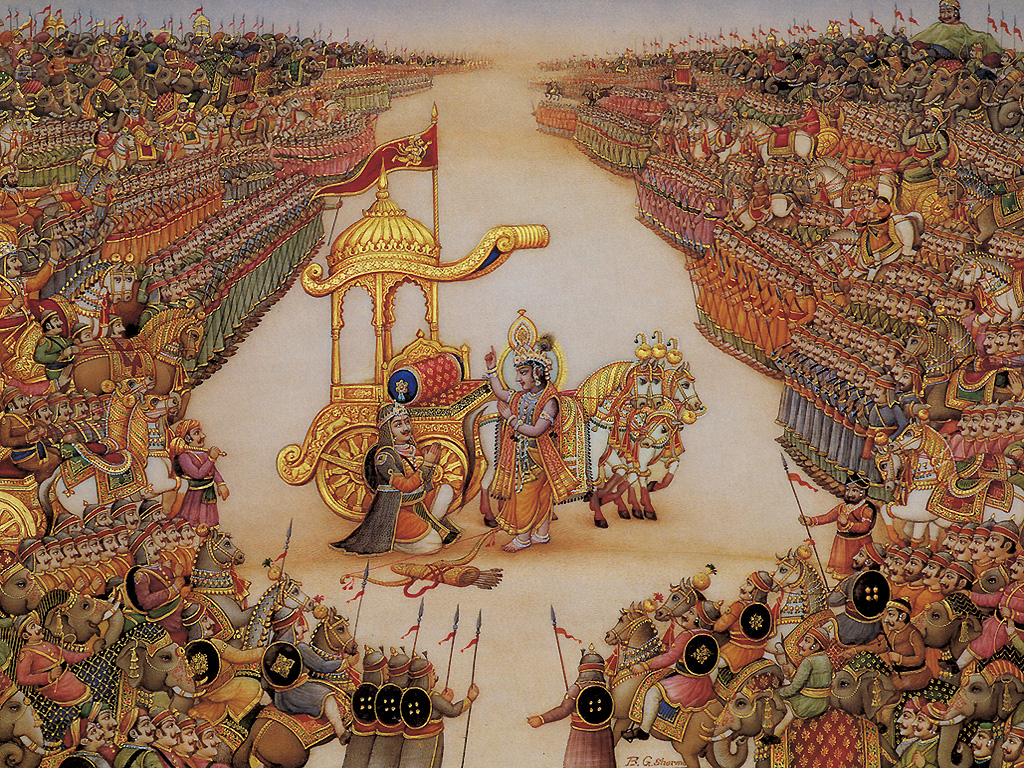
The Bhagavad Gita, or The Krishna Con


On the battle-plains of Kurukshetra, shortly before the Great Battle of the Mahabharata is about to begin, Arjuna is overcome by self-doubt. He thinks it is wrong to fight, to take part in the killing and the destruction of his own family and kinsmen. Krishna intercedes, and through a masterpiece of oratory, convinces him of the righteousness of war. The exchange between Arjuna and Krishna forms the basis of the Bhagavad Gita.

The Bhagavad Gita is a work of great lyrical genius, considered by many a source of moral and spiritual instruction and inspiration. But it may also have been a con job, carried out by Krishna on the unwitting Arjuna to ensure he takes part in the battle ahead.

Krishna wraps up his arguments in the language of righteousness, but there is another possibility: that Krishna uses the language of religion only to disguise a more pragmatic agenda, that the veneer of dharma and duty is only a clever polemicist's tactic, and Krishna has no real intention of trying to provide Arjuna meaningful moral instruction or guidance.

************************************************************************************
Example 1: The What Will Everybody Say? Argument

Krishna says the following -
The wise grieve not for those who live, and they grieve not for those who die - for life and death shall pass away (2:11)

From the world of the senses, Arjuna, comes heat and comes cold, and pleasure and pain...Arise above them, strong soul (2:14)

The man...beyond pleasure and pain, is worthy of life in Eternity (2:15)

Be in peace in pleasure and pain, in gain and in loss, in victory or in the loss of battle. In this peace there is no sin (2:38)

Do thy work...free from selfish desires, be not moved in success or in failure. (2:48)

Let us without reservation accept the above comments as sincere and well-meant. So Arjuna should be indifferent between
1. living and dying
2. heat and cold
3. pleasure and pain
4. gain and loss
5. victory and loss
6. success and failure

Arjuna is instructed to treat with equanimity the most fundamental experience of his life - this is a war which will see most of his own family - his guardian, his teachers, his son killed - but he should see beyond life and death. The pleasures and experiences of the senses, the joy of victory or gain or the sorrow of loss and suffering, even the feeling of heat or cold, he should rise beyond them all, treating them as one, resolute, indifferent, his mind at peace.

And yet, Krishna doesn't hesitate to also suggest in the same breath the following:

Men will tell of thy dishonour... And to a man who is in honour, dishonour is worse than death (2:34)

And thine enemies will speak of thee in contemptuous words of ill-will and derision, pouring scorn upon thy courage. Can there be for a warrior a more shameful fate? (2:36)

In 2:34, Krishna seems to be suggesting to Arjuna that people slandering him behind his back is worse than his family and hundreds of thousands of other people being killed. And while Arjuna should aim to be indifferent to the most fundamental and important aspects of his life, noticing neither hot or cold, not affected by the death of his wife or son, it would be unbearable to have people calling him names!

************************************************************************************

Example 2: The It is For Your Own Benefit Argument

Krishna says: See the comments in Example 1. Additionally, he also says

Set they heart upon thy work, but never on its rewards. Work not for a reward...(2:47)

Word done for a reward is much lower...How poor those who work for a reward! (2:49)

Krishna counsels Arjuna should fight because it's his duty as a warrior, without considering the rewards of doing his duty. But who earlier mentioned the rewards of doing one's duty in the first place? Let's see....

There is a war that opens the doors of heaven, Arjuna! Happy the warriors whose fate is to fight such war. (2:32)

In death thy glory in heaven, in victory thy glory on earth. (2:37)

If one should never do one's duty for the sake of the reward, then why mention the reward in the first place? What are the warriors meant to be happy about, why should Krishna twice remind Arjuna of the rewards of doing his duty? Another odd passage, with Krishna alternating between telling Arjuna he should do his duty without thought for its rewards, and telling him, Arjuna, think of the rewards!

***********************************************************************************

Are we to believe that all the above lines are mutually consistent and compatible? Or that Krishna was not clever enough to be aware of the contradictions in what he was saying? One could alternatively believe that getting called names is a more profound and serious matter than issues of life and death. Given the difficulties with all of these options, it seems conceivable to suggest that Krishna was a brilliant orator and polemicist, fully aware of his own hypocrisy. It was his intention to use every argument at his disposal, both honest and dishonest, to convince Arjuna to fight, even if he had to alternate between suggesting everyone getting killed was no big deal to saying a moment later that getting called names was. It certainly seems no more implausible an explanation than believing the Supreme Personality of Godhead can't even string a speech together without it contradicting itself.

Anyway, good night everybody, and as the stickers and posters in this neighbourhood say these days, "Say Gouranga! And Be Happy!"

Footnote:
All translated lines are taken out of preference from The Bhagavad Gita, translated by Juan Mascaro, Penguin Classics. Other translations including the one at asitis.com were also consulted.


moo....

Wednesday, September 06, 2006

On the crescent

Why is the crescent the symbol of Islam? I asked around. Well I asked a few fellow cabbies, and googled and wikied. The answer, it seems, is not very clear.

It seems that there is no theological reason behind this. It was not the Prophet’s symbol. And some argue that using any natural object as a symbol of Islam violates the faith’s fundamental tenets.

One idea is that the crescent symbolizes the new beginning. The Islamic calendar is a lunar one. The new day begins in the evening, and a new month begins with a new crescent, the hilal. Anyone growing up in a Muslim country would know the excitement the sighting of the hilal at the end of the month of Ramadhan causes.

So the crescent symbolizes the new beginning? Hmm… probably not. See, the hilal is a waxing crescent — its horns are facing left in the northern sky (where all Muslim lands are). The crescent that you see in the flags of many Muslim countries is waning — the horns are facing right in the northern sky, it’s not a new moon, it’s a dying moon!

The other idea is that the crescent featured in the symbols of many pre-Islamic powers of West and Central Asia. It was the symbol of Diana, the pre-eminent goddess of Byzantium aka Constantinople aka Istanbul. After capturing the city, Osman, the founder of the Ottoman Empire, apparently had a dream that a crescent covered the Earth. Taking this as an omen, he adopted the crescent as the symbol of his domain. Osman wasn’t the first ruler of that city with a dream-omen. Constantine, the Roman Emperor after whom Constantinople was named, adopted Christianity after he saw the cross in a dream, before a decisive battle.

Anyway, the crescent became the symbol of the Ottoman Empire, many centuries after the Prophet, but what does this have to do with Islam? Maybe it was the Firangis, equating the Ottomans with Islam, gave Islam the crescent symbol. After all, they gave the Turkish Sultan the title of the Caliph.

Right, so the crescent really may have nothing to do with Islam. Neither the Islamic Republic of Iran nor Saudis in their capacity as the guardians of the Holy Cities have it in their flags. Turkey may have historical reasons to have a waning crescent in its flag. But why did the Pakistanis adopt this for their flag? Or did Pakistan’s founders realize that the country they were creating would be ever-waning?

Thursday, August 31, 2006

On Tabligh Jamaat

The Guardian ran a front page article about Tabligh Jamaat couple of weeks ago. The article, titled ‘Inside a secretive Islamic group: the Guardian gains access to a fundamentalist Islamic movement being monitored by MI5 and the FBI’, caused this reaction by Amar:

The Guardian visits a Tabligh Jamaat meeting, and it is cause for a front page headline? Have I died and moved to a parallel universe? Since when did Tablighis become a secretive group? F…ing ignorant foreign pieces of s...t.

The Guardian was not the first foreign lot to identify Tabligh Jamaat as a Jihadi group. In his much overrated book on the Company, Robert Litell said some of the Afghan Mujahedin the CIA was paying to fight against the Soviets may have as extreme politically as Tablighis. But then, these days even Desi commentators seem to think that Tablighis ‘would have to remain under the scanner…’

Maybe things are different in Europe these days. But back in the seventies, things were different. Ziauddin Sardar begins his desperate journey in the summer of 1972 with a hilarious introduction to the lot, with their simplification of Islam into a basic six-point formula, with their knack for terminologies, and with their mind boggling travel itineraries.

Now, this accords well with my experience with this mob. I first had a close encounter with them at the Benapol border in January 2000. This was just after their Ijtema — the largest Islamic gathering after Hajj, I don’t know why it happens in the outskirts of Dhaka. A bunch of them were crossing the border into India. As was I. In a display of Indian secularism and anti-imperialism, the Indian immigration official let dozens of Tablighis, in their turban and kurta and pajama (carefully above the ankle), pass while poor clean-shaven me, in my cargo pants, had to wait for an hour. I got talking to some of the men. It seemed like a rather cheap way of traveling the world. You get free food and accommodation. You sleep in the mosques — much safer than any hostel. And what self-respecting Desi could refuse the food: usually meat curry and parratha/pulau/khichudi? All in return for bowing your head at designated times, which is good exercise anyway.

No. I did not join them. The food actually was a problem. You see, they eat from the same plate, which is fine if you’re eating fried meat, but doesn’t quite work with curry and rice. And, of course, not being a believer also mattered.

Anyway, Sardar escaped the Tablighis with Sister Sophia, a very pretty and blond convert to Islam — this is a very enjoyable book, and hopefully I will write about it some other time, but this post is about Tabligh Jamaat, not Sardar.

So back to Tablighis. Sardar found them completely stupid in 1972. Well suicide bombers are stupid too. There weren’t any of them around then, and there seem to be quite a few now. Are stupid Tablighis breeding stupid Jihadis? Gilles Kepel says that Tablighis peaked in Europe between the mid-1970s and mid-1980s, and were overtaken by radical Salafist groups by the early 1990s. Many of these Salafists were inspired by the Muslim Brotherhood and Jamaat-e-Islami. These organisations are very much political. The former has spawned Hamas. The latter is a major electoral factor in Pakistan and Bangladesh. Their organisational structure has been modelled on the Leninist party structure. And one can see how the more radical Salafi groups might splinter into the Jihad International that menaces us. But where do the Tablighis fit?

In Desh, Jamaat-e-Islami has traditionally rejected the Deoband School that inspired Tabligh Jamaat. Tablighis in turn has called Maolana Maududi, Jamaat-e-Islami’s founder, an apostate. According to Ahmed Rashid, this traditional animosity between Maududites and Deobandis apparently played a crucial role in the rise of the Taliban. Because Jamaat-e-Islami was an ally of the Zia regime and the ISI (Pakistani secret service), their allies under Gulbuddin Hikmatyar were favoured during the war against the Soviet. When the People’s Party came to power in 1993, it was reluctant to trust the ISI with the Afghan policy. Instead of making a deal with Ahmad Shah Massoud, Gen Nasrullah Babar, Ms Bhutto’s Interior Minister, decided to cultivate the Deobandis. Taliban was the result. The rest, as they say, is history.

Anyway, back to the question at hand. Do Tablighis breed violent Jihadis? Perhaps. But they are most definitely not ‘secretive’, as the Guardian suggests. And frankly, they ought to be ashamed of publishing such sensationalist s...e.

Tuesday, April 25, 2006

Madrasa Zeya-Oloomul Mosque Bodhgaya Bihar India 16.01.2003 His Holiness the 14th Dalai Lama

We like this photo so much.

[Photo by Manuel Bauer, from this website: http://www.dalailama-archives.org]

Saturday, March 18, 2006

AAA say: Save the birthplace of the Prophet Muhammad!


What is taking place?

Saudis have taken the Birthplace of the Prophet, which is currently a small library resting on the original home of Sayyidina Abdul Muttalib's foundations, and have covered it up in the process of demolishing the building and eradicating its foundations, after which they intend to build a very large building at the site to be the King Fahd Library.


Ironic isn't it. All the fiery rabble-rousers, theologians, politicians and mobs of the muslim world are more interested in destroying denmark [in the name of the prophet] rather than protecting what remains of the same prophet's house.

AAA are confident that the
prophet's honour is unaffected by a few cartoons. But we are rather concerned about the chances of the prophet's house surviving the bull-dozers of the faithful! So here we are, supporting this cause, joining forces with this cool looking sufi guy who lives on the banner page.

sufi: hi everybody!

Wednesday, February 15, 2006

Sita the Bitch


Laxman, Ram and Sita

For someone venerated in popular hindu tradition and culture as the most perfect of women, the very ideal and epitome of feminity and womanhood, the best of wives and the best of daughters, an inspiration and example for all women to aspire to, an incarnation of the goddess Lakshmi to be worshipped and respected, for someone who is considered all these things, at times that Sita was one dirty-minded untrusting aspersion-casting foul-mouthed bitch.

Allow me to remind you of a certain incident. In those days, Sita was living in the forest along with her husband, Ram, who had been exiled from his kingdom. Laxman, Ram's devoted younger brother, was also living with them.

One day, the demoness Shurpnakha happened to see Ram and was very attracted towards him. But when he (and subsequently Laxman) rejected her offer of marriage, in jealousy she tried to attack Sita, only to be stopped by Laxman who cut off her nose.

Shuurpnakha, noseless, a woman spurned, went to her brother, Ravan, the ten-headed demon-king of Lanka, with visions of revenge. She persuaded him that he should kidnap the beautiful Sita and make her his own wife. Ravan agreed, and a trap was laid.

Time passed, and one day Sita saw a golden deer playing in the forest. She was so captivated by its beauty, she asked Ram to catch it for her. Ram, ever obliging and considerate, told Laxman to guard Sita, and went in pursuit of the golden deer. But the deer was just a lure; it was in reality the demon Mareecha in disguise, who led Ram further and further away from his forest home. Now Laxman and Sita were alone.

Suddenly, they heard cries of anguish in Ram's voice coming from the distance. Laxman was unmoved. He reminded Sita that Ram was invincible, the greatest of warriors, this could not therefore be his voice, it must be someone pretending to be him. And so they should be wary of these cries.

But Sita would not listen. She begged, pleaded, and implored Laxman to go to his brother's defence. He insisted he must stay there and guard her as his elder brother had instructed.

Sita became silent, and eyed him thoughtfully. When she spoke again, her voice had venom in it. I see now what is happening, she said.

You lust for me, and because of your desire, you wish to see your brother dead. It is clear now. That your brother is in grave trouble gives you much pleasure. You don't want to defend him, you don't want to help him, no, you want to stay here to be with me. You are debased and condemnable, you bring shame to your ancestors and find pleasure in your brother's suffering. You came into exile with Rama. When he is not here, with what intention and legitimacy do you stay here with me now? It is not unsurprising that people like you, would-be-rivals with concealed desires, commit such terrible sins. You have followed Ram into exile only because of me. But I will not touch any other man than Ram. I will take my own life first.


Under this onslaught of rage and fury, Laxman succumbed, and left Sita alone to go in search of Ram. In his absence, Sita was kidnapped by Ravan and taken to Lanka. Ram raised an army and headed to Lanka to wage war on Ravan. Eventually, Ravan was defeated and Sita rescued. The defeat is marked by the festival of Dussehra (literally ten heads), where Ravan's effigy is burnt, and Ram and Sita's safe return to Ayodhya is celebrated as Diwali. But the relationship of Ram and Sita was over for good. On her return, Ram would express doubts over Sita's fidelity, and require proof of it from her. Sita went through a trial of fire to give him the proof he required, but humiliated, she then left him and returned to be with her mother.

Maybe I judge Sita harshly, but then falsely accusing your brother-in-law of wanting to have sex with you and wishing to see his own brother dead, indeed being complicit in his murder through willing negligence, doesn't fit in with my ideal of womanhood.

Also, should you think I am being sexist and picking on Sita alone, I hasten to add that she is not the only flawed character to be found in the Ramayan and Mahabharat epics. From Ram's own behaviour towards Sita after rescuing her to Yuddhistara's addiction to gambling to Krishna's adulterous sex-crazed ways, the heroes of the epics also have their failings and flaws. Maybe more on them another day.

photo source

Monday, February 06, 2006

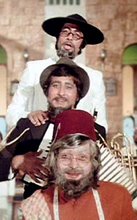
Amar Akbar Anthony and the Danish Cartoon Controversy

Amar: Attack of the Cartoons

Like Akbar and Anthony, I am also troubled by the outburst in the muslim world to the infamous Danish cartoons. We are all offended (though clearly some more easily so), and thus we must rise to defend what's precious to us. Some rise to protect their prophet and religion from a cartoon, I side with those who defend the freedom of speech from violence and censorhip.

Of the cartoons themselves, there are twelve, each by a different cartoonist. Most of them depict Muhammad, including one showing him wearing a bomb as a turban. So, they are in bad taste. So what? People don't have to see the cartoons, those who do not like them do not have them impinge on their lives in any way. Yet we are witnessing a mass outbreak of childish hysteria across the muslim world, screaming from the rooftops, boycotting danish goods, committing arson, violence and threatening more to come, demanding that the rest of the world's freedoms be constrained.

There is something bizzare about these protests. People are screaming that the depiction of the prophet is prohibited in Islam, the reason being that people will start to worship these depictions instead of God. But noone is going to worship these cartoons! There is no danger of idolatry resulting from some cartoons of dubious taste, so what rationale for finding offense in mere drawing?

I can understand better the idea that mocking the prophet is offensive. Not that I care. I find most religious books and their language towards non-adherents highly deplorable and condemnable - but I don't threaten the books or their believers with violence, demand their repudiation or censorship. I choose instead not to take the stuff seriously, and not be bothered about it. It works brilliantly. Imagine, just turn the page and the cartoons won't be there. Why is this so difficult?


Akbar: Troubled Hearts, Conflicted Minds

The blood boils. Some hearts weep. Some minds go blank. Eventually property was damaged. Threats were made…Lives nearly lost.

It was only a cartoon, some would say. Others interject ‘it was our Prophet Muhammad ...not your version of golden haired playboy Jesus you were making a mockery of…after all Jesus is our Prophet as well!’

Words are exchanged back and forth.

‘After all Freedom of Speech is more important than respect for your Prophet…you are like of any other religion, not vaccinated against criticism’.

It is freedom of insult you speak of, not speech. For you have no idea or respect for speech and eloquence. What concern you have with a dead Prophet, who you depict as a terrorist’.

Does one man’s cartoon make Muhammad a terrorist? Even Muhammad would have forgiven him, had he been alive today.

It is forbidden to depict our beloved Prophet!’

You ignorant! Have you no idea that it is forbidden to depict the Prophet or companion so our kind may not idolize him or start worshipping him, which is an even bigger blasphemy. After all he was but a man’ the wiser of us says.

We will not use your products. We will destroy you financially. We boycott all that you sell in our lands.’ shouts an agitated one.

You only destroy your country people, their jobs, and their families in this process.

They are to blame for their own fate. They chose to work for a Danish company. They chose to be part of this blasphemy.

Not all of our people support the cartoons. It was only one cartoonist.

But your people continue to support his right to publish and distribute the cartoons?!!

We cannot control every man’s will or mind, for we are a free country. Does not your Quran also teach you importance of freedom? Surely you deny not what is in the Quran?


We have progressed for we have applied what the Quran teaches you. We cannot control human beings. Live and let live. We have dialogue, not violence to solve our issues. Yet you destroy out embassies and property. Does your Islam not teach you mercy, compassion and non violence?

-------------------------------------------------------

The cartoon saga has boiled to the point of being stupid and unfunny. A stupid cartoon got a stupid reaction. One of Newton bhai’s many laws.

May Allah have mercy on the cartoonist’s soul. (I assume his near death is very certain).


[Dear Reader: This issue resulted in me doing a lot of soul searching as a Muslim and
spending much time discussing the issue of Freedom of Speech with my friends Amar
and Anthony. Both of them are much wiser in this field and have enlightened me greatly
in this topic.

However, I could not avoid noticing one major contradiction within western society on the topic of freedom of Speech. It is the fact that any comments questioning certain facts of Holocaust Revisionism on six Million Jews is treated as criminal offence in certain European countries and most of the western world while making fun of Prophet Muhammad which affects One Billion muslims, is treated as a case of free speech. This contradiction does not go down too well with me, however my friends may disagree].

Anthony: Opium of the Masses

I am sure everyone is aware of the cartoons, and have seen the anti-cartoon protests and mob violence. And I’m sure most people have their views: those of us with a libertarian bent say that it is stupid of the Muslims to get worked up about this when the solution is to turn the page; those of us with a utilitarian mindset on the other hand ask why make all this trouble when you know it’s going to rile a lot of Muslims; some say that the freedom of speech is biased when certain issues in European history are taboo to talk about; others argue that two wrongs don’t make a right.

I don’t wish to get into the debate because these positions have been stated by Amar and Akbar. Let me raise another question: how is it that a bunch of Danish cartoons have caused so much anger? Muslims being offended because their prophet was insulted, you say. Sure Muslims were offended, well some of them any how. And now the issue has taken a life of its own, with a crowd of hundred denouncing the cartoons in faraway New Zealand. But would you have even heard of these cartoons unless there were mob violence in Syria, Lebanon and Palestine?

So how is it that such huge crowds turned out in these countries? A protest requires lot of organising and resources. Well typically it does, but maybe Syrians are much more religious than people in Sylhet and Palestinians care more about the prophet than do the Punjabis, and it all happened spontaneously.

But that’s not the case. You can google and see for yourself that the protests in Lebanon were organised by Hezbollah, those in Palestine by Hamas, and in Syria — a good old fashioned police state — the protests could not possibly have had taken place without official blessings.
Don’t Hezbollah or Hamas have anything better to do? Hezbollah is now part of the Lebanese government, and Lebanon is hardly the paradise on earth! And have Hamas forgotten that their people are still living under a foreign occupation? Surely the freedom for their people is more important than these cartoons?

Or maybe now that they have been given the responsibility to govern, Hezbollah and Hamas find the task too hard. Maybe the leaders of Hizbollah saw the cartoons and said to themselves: a-ha, we got these cartoons, and we’ll waive these around, and people will forget that we’re not (or might not be) performing that well in government. Maybe Hamas decided that this was a good distraction for them before they do a Sadat and recognise Israel. Syria, with its Ministry of Truth, probably actually hatched the plan!

And I guess it worked like a treat. Boy oh boy those Muslims are dumb to have fallen for this trick, you might say. Sure, like those Christians in Ohio who voted for Bush because he would defend the sanctity of marriage, or those Hindus who voted for BJP because of that old ruin in Ayodhya. I guess that old fellow was right after all when he said that religion is the opium of the masses.

Wednesday, January 11, 2006

marriage versus monasticism

In this vain fleeting universe, a man
Of wisdom has two courses: first, he can
Direct his time to pray, to save his soul,
And wallow in religion's nectar-bowl;
But, if he cannot, it is surely best
To touch and hold a lovely women's breast,
And to caress her warm round hips, and thighs,
And to possess that which between them lies.

— Bhartrihari

[c.f. the description of women with shantideva's: And all for pleasure and the perfect bliss, that utmost penetrating kiss, of what in truth is nothing but a heap of bones]

It is hard to tell what Bhartrihari [and his translator] consider to be the better option. On one hand, 'marriage' is described as the also ran, the second-best, the path to be pursued if one "cannot" the first. And yet, the language implies the reverse. The monastic path is almost dismissed when described as wallowing. In contrast, it is with a lingering fondness that the charms of women are enumerated in almost pornographic detail. Which path to follow, then?

We use the word marriage as a proxy for the world of sensory gratification, of the satisfaction of the house-holder duties of kama and artha.

Hinduism would appear to traditionally suggest that in life one should go from monasticism [brahmachari] to marriage [grihastha], and then back to monasticism [vanaprastha, followed by sanyaas]. These are rites of passage, and each stage is both important and necessary. Many buddhists on the other hand will often embrace monasticism at an early age, and continue that path for the rest of their lives. This was not the case with the Buddha himself however, who grew up in a life of sexual gratification [his father's idea], before getting married and having a son. He walked out on all this one day realising it to be futile and pointless, and became a monk [a bhikkhu] until the day he died. The monastic order [the sangha] he founded repuired celibacy and abstinence of its members.

To move away from holy men and closer to mere mortals, I am reminded of the travel writer pico iyer's book four seasons in kyoto. He goes to Kyoto and for a year lives in a monastery, but at the same time finds himself falling in love with a woman he subsepuently married. We once had a neighbour who had once been a monk, but then gave up his robes after falling in love. The actress Uma Thurman's father too was once a monk.

One of the stories about Bhartrihari is that he was once a king, who upon learning of his wife's infidelities, gave up his crown and became a hermit. Many hindus move on from being house-holders to renouncers. One famous but somewhat disturbing example was mahatma gandhi, whose weird experiments with celibacy were probably not what the hindu sages recommended.

It is also worth noting that the ancient hindus seemed to think it too difficult to be a monk from the start anyway. After all, Bhishma in the Mahabharata is famous for the terrible oath he took, and what oath was that but not to marry [ie remain celibate][passage: Devavrata made a terrible vow, that he would never marry so that such a situation would never arise. The earth and the heavens resounded with this terrible vow and the sound of "Bhishma". "Bhishma" echoed through out the heavens and the earth.]! And yet, thousands of monks take the same oath every year, many of them young men who have never known the world of kama. And if monasticism is the eventual path to truth, the recommended final path for both ascetic and householder, then why waste time, why not embark on it as early as possible?

Another story about Bhartrihari is [there are many, and it is hard to say which ones are true] that he was a man who could not make up his mind whether to follow the sensual or ascetic path. Each time he chose one path, he would see its deficiences and the attractions of the other, and go to the other. And so he would move back and forth from pleasure and renunciation.

So all kinds of permutations seem possible. One may become a monk, and forever remain a monk. One may marry and never become a monk. One may marry first, and then later become a monk. Or one may become a monk, and then later marry. But which option is best? Can happiness be found in the pleasures of the world, or is the quest so foolish and futile that it would be better to pursue the cessation of suffering? Or should we try both paths? If so, in which order?

Monday, January 02, 2006

esoteric themes for meditation

In Buddhism, historically there were forty potential subjects of meditation. This included ten asubhas, or impurities. Each asubha referred to a certain condition of human corpse. Out of interest, I record below the ten types:

i. bloated
ii. discoloured
iii. festering
iv. dissected
v. gnawed-to-pieces
vi. scattered-in-pieces
vii. mutilated and scattered-in-pieces
viii. bloody
ix. worm-infested
x. skeleton

Thursday, August 18, 2005

...

I wonder at the idea of prayer. that people should worship their creator. That we have something to be grateful for. do prisoners thank their jailors for their captivity?* uparwallah, if he exists, is perverse and vile. who gave us an infinite capacity for pain. who lets us suffer from birth to death. that we owe him anything is false. he is not to be thanked or praised. he is our enemy, he is a bastard

but then i look around me. what is humanity like? selfish, vindictive, malevolent. in the pain and loss of others, we seek to find our pleasure and satisfaction. And I think. At least one thing the priest says is true.

God created man in his own image.

Sunday, March 20, 2005

Fitna

There is fitna in the community! Muslims of this town are divided, so much so that the Imam of the Mosque saw it fit to spend over an hour of the Eid sermon reviling the Islamic Centre (CIC). And that was in November. Since then, there may have been a fatwa issued, calling on people associated with CIC to reconsider their ways or risk being branded as apostates. CIC however shows no sign of liquidating, so for the Mosque to retain any credibility, the Imam I presume will have to declare CIC and its members apostates. Hmmm, then again, perhaps no second fatwa is needed - after all, no second resolution was needed for the UNSC's will to be upheld.

So, what is causing this division?

The proximate cause appears to be an article published in CIC's September newsletter. The article, about intimacy between the sexes in Islamic tradition, caused a bit of shake up, as well as stir. No, I haven't actually read it, and have no opinion on the subject. Really! But the Mosque people did read the article, and expressed their opinion rather clearly – such stuff aren't talked about in Islamic tradition. CIC relented, the article was withdrawn, apologies were issued. But maybe the apologies were not accepted.

Maybe it's about the $600,000 received by CIC in private donation in 2004, which I understand is a substantially higher sum than received by the Mosque. The Mosque was built by a joint undertaking of the Pakistan, Indonesia and Malaysia missions in the late 1960s. It’s primarily OIC, read Saudi, funded. It has been the centre of the town's Muslim community until a few years ago, when CIC appeared on the scene. CIC is registered as a community organisation, much like the South Yarra Country Club. They run ber-be-queues, children's creche, pool tables, a food stall, a gym, and oh they're Muslims – so they have a prayer hall, and they sell religious paraphernalias, and run Quran classes and discussion groups. And from the onset, CIC claimed to be independent of the Mosque – a curious proposition, since in Islam there is no organised Church hierarchy, there is no Islamic Diocese.

By late 2004, CIC Friday prayers drew more people than the Mosque, although the latter is within the walking distance of most government offices and embassies and a short bus ride from the university, while CIC is inaccessible by bus and a sweet 15 minutes drive for most Muslims.

So maybe the tussle is about leadership then! Yes, probably. But also probably about the fundamental role a mosque or an Islamic centre should play in the modern Muslim community in the Western world. The Mosque appears to be of the view that the proper role is to offer a Friday prayer and sermonise everyone about the virtues of parying five times a day. CIC appears to be more like the Christian Jesus saves mob. The Mosque doesn't like any discussion of topics such as sexuality. They are offended by intra-sex meeting that happens at the communal viewing of India-Pakistan cricket matches. They denounce chand raat festivities and girls wearing mehendi as unIslamic. Did I mention that the mosque is primariliy Saudi funded? Well, there you go then, the Saudi petro dollars spreading the Salafi-Wahabi brand of Islam where everything is clear-cut, black and white, holy and unholy.

Maybe. But CIC isn't a secular institution either. These are religious people, in strict definition of the word, fundamentalists – in the way that Mr Bush is one. Evolution for them is not even a theory, but satanic lies. They are against women's right to choose and homosexuality for them is a sin (I'm not sure of their views on stem cell research). But mainstream Islam does require you to hold those views, the way the mainstream Catholicism does. It's a different matter whether you consider yourself an 'enlightened Muslim or Christian', accepting both the God of Abraham and homosexuality – you my friend, wouldn't be mainstream.

CIC people are overwhelmingly, though not exclusively, of Desi origin. Bollywood glared from the sound system on chand raat, while the feasts involved pulau and biriyani and nehari and kebabs and naans and kheer and rashgulla. If the fitna is permanent, Anthony will be taking long detours.