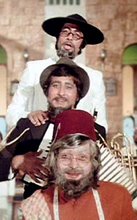
Amar
I am becoming curmudgeonlier in my old age. A couple of years ago, I would think, yeah, I prefer test matches, but I don't feel need to heap scorn on one dayers the way that Anthony does. Now, I keep hoping that one dayers die, die, die!
It may be because the trade offs have become more explicit — India has time to play Australia in about 11 ODIs in six months, but not enough time to play 2 practice matches before a test series against Australia in Australia? India needs longer test series, and more practice games, if it is to do better overseas. The reason this doesn’t happen is because of one dayers.
One dayers are destroying what is valuable to me, and therefore I want one dayers to lose. And those who promote one dayers, those boors lacking in taste and an appreciation for subtlety and complexity, curses on them too.
Anthony
Real test cricket is the only thing that does it for me. Oddly, it is because I’m so time constrained. I can’t be bothered spending an hour watching big hit after big hit. I’d much rather watch half an hour before tea on a crucial 3rd day.
Amar
I think those who like test cricket should support the rise of 20/20. Here's the theory.
On a spectrum of contest between bat and ball, test cricket is at extremes from 20/20. Therefore the more 20/20 we have, the lesser the contest between bat and ball. This is bad if you like test cricket. However, 20/20 is not competing with test cricket. They are so different, that 20/20 only takes converts from ODIs, and reduces the number of one-dayers.
Now there is a difference in skills required between tests and one-dayers. There is an even greater difference of skills required between tests and 20/20. Therefore, there will be more players suitable for tests but not 20/20 (or vice-versa), compared to tests vis-a-vis ODIs.
This means we will have a larger number of players who only play tests. Therefore less cricketers will face the issue of fatigue from playing both forms of game. Therefore they should be available to play more test cricket, and we should see finer performances from test specialists. We could have the occasional young mavericks who feed into test cricket from 20/20 and bring the skills they learn. But the shorter form of the game becomes essentially a different game, rather than the leechthat is one day cricket.
Anthony
The future of cricket is in Desh. If Desis want to do away with test cricket and play only 20/20, then that’s what will happen.
Amar
20/20 could be Desh's summer sport — played at night when it is cooler, under lights with matches say from 8pm to 11:30pm. Test cricket would be the daylight form of the game, played in the winter months when conditions allow it. And of course, there should be a regular home season — this should not be the preserve of white nations. This would also work well for another reason: the summer months are off-season for most test nations, so little test cricket could be played in summer anyway (apart from in England). So they could knock themselves crazy playing 20/20 all summer long.
Showing posts with label sports. Show all posts
Showing posts with label sports. Show all posts
Thursday, November 01, 2007
Thursday, August 09, 2007
England 2009
There exists the exciting possibility that sometime in the future (2008 onwards), we will see an England cricket team go into a test match with three specialist spin bowlers, representing each of the three main disciplines of spin bowling (the fourth, left arm chinamen, are extremly uncommon).
Even more amazing, all three of them could be desis.
The potential line up:
Adil Rashid - leg spin
Saqlain Mushtaq - off spin
Monty Panesar - left arm orthodox.
Monty Panesar has already secured his place in the England team. Adil Rashid is an 18 year old doing phenomenally well in county cricket and has already been identified as a future star by a number of experts. Saqlain Mushtaq previously played for Pakistan with great success at international level, but disappeared from the scene due to injury. He now holds a British Passport and becomes eligible to play for England in 2008. He also took his first 5 wicket haul on return from injury yesterday, in the process out bowling Mushtaq Ahmed, the leading spin bowler in English County Cricket.
Even more amazing, all three of them could be desis.
The potential line up:
Adil Rashid - leg spin
Saqlain Mushtaq - off spin
Monty Panesar - left arm orthodox.
Monty Panesar has already secured his place in the England team. Adil Rashid is an 18 year old doing phenomenally well in county cricket and has already been identified as a future star by a number of experts. Saqlain Mushtaq previously played for Pakistan with great success at international level, but disappeared from the scene due to injury. He now holds a British Passport and becomes eligible to play for England in 2008. He also took his first 5 wicket haul on return from injury yesterday, in the process out bowling Mushtaq Ahmed, the leading spin bowler in English County Cricket.


Sunday, July 29, 2007
The BCCI has no shame!
An excerpt from a rediff interview with Niranjan Shah, the BCCI Secretary. The discussion turns to the applicants for the position of new coach for the Indian team, and Mr Shah gives us the spectacular sequence of responses below, each of which contradicts his previous answer:
Have all these applications come from abroad?
Yes. They all have come from abroad.
But an Indian is also learnt to have applied. Isn't this true?
Maybe someone from India has also sent an application, but I don't remember exactly at the moment.
Who is he?
I think it is Chandrakant Pandit.
Tuesday, July 24, 2007
Lord's: Zaheer Khan attempts a hat-trick

India v England, 4th day of the 1st Test at Lord's: Zaheer Khan is on a hat-trick as he bowls to England's no.9 Ryan Sidebottom.

Zaheer's yorker is on target, but Sidebottom manages to keep it out.

The fielders' arms go up in the air.
The Coming Revolution in Indian Cricket - Part 1
These are exciting times for followers of Indian Cricket. A big bloody battle looms on the horizon, as the comfortable monopoly of the Board of Control for Cricket in India is challenged by the bold entrepreneurism of Subahash Chandra and his Zee TV network.
Historically, the BCCI has had complete control over India's domestic and international cricket programme. As the Indian cricket brand has increased exponentially in value, the Board has grown richer and fatter. They have however concentrated so far only on International Cricket, neglecting Domestic cricket. Most domestic cricket games in India are a grim affair, played to empty stadiums by essentially anonymous cricketers. The schedules and venues and formats change arbitrarily, the players from the national team rarely take part, and when players reach the national team, they seem to have turned up from nowhere. For nowhere is where domestic cricket currently is.
This is where Zee TV's ambition is so exciting and refreshing. They want to create a professional Indian Cricket League, with city-based teams and a combination of local foreign players, which will attract viewers at stadiums and on television. They want to transform the domestic game, raising its profile, and making it into a popular entertainment product. In the process, they will improve domestic cricket infrastructure, increase the employment opportunities for everyone involved in the game of cricket, and offer a great new product to Indian cricket fans.
Historically, the BCCI has had complete control over India's domestic and international cricket programme. As the Indian cricket brand has increased exponentially in value, the Board has grown richer and fatter. They have however concentrated so far only on International Cricket, neglecting Domestic cricket. Most domestic cricket games in India are a grim affair, played to empty stadiums by essentially anonymous cricketers. The schedules and venues and formats change arbitrarily, the players from the national team rarely take part, and when players reach the national team, they seem to have turned up from nowhere. For nowhere is where domestic cricket currently is.
This is where Zee TV's ambition is so exciting and refreshing. They want to create a professional Indian Cricket League, with city-based teams and a combination of local foreign players, which will attract viewers at stadiums and on television. They want to transform the domestic game, raising its profile, and making it into a popular entertainment product. In the process, they will improve domestic cricket infrastructure, increase the employment opportunities for everyone involved in the game of cricket, and offer a great new product to Indian cricket fans.
This is a great opportunity for Indian cricket. And the BCCI is trying to strangle it at birth.
(to be continued)
Friday, July 20, 2007
A-A-A want democracy and test cricket
Amar: If this deal between BCCI and Zee TV is cancelled, it will be good for all. Stupid BCCI is trying to find another broadcaster. Let's get rid of all the one-dayers, and have a bloody extra practice game in Australia. And maybe an extra test in England instead of 7 one dayers!
Anthony: I presume the idea is to 'improve' irish cricket. Irish cricket would be better served if India played a three or four-dayer against Ireland. This would also give the Indian team good conditioning practice.
Amar: Oh no. Nothing to do with Irish cricket. The idea was to honour the 200 million plus deal done with Zee TV for playing offshore one-dayers in non-test centres (if played in test country, the local cricket board has the TV rights apparently — don't know how). Thus the 3 one-ayers with South Africa. I think the one match with Ireland was just a sop — they are also playing Pakistan in Scotland, without playing Scotland.
Anthony: What do you think will end first — this obsession with one day cricket, or military rules in Pakistan and Bangladesh?
Akbar: This obsession with one-day cricket shows that the people of Pak-Bangla lack the genius for democracy. Only when the people are ready for test cricket can democracy succeed!
Anthony: I presume the idea is to 'improve' irish cricket. Irish cricket would be better served if India played a three or four-dayer against Ireland. This would also give the Indian team good conditioning practice.
Amar: Oh no. Nothing to do with Irish cricket. The idea was to honour the 200 million plus deal done with Zee TV for playing offshore one-dayers in non-test centres (if played in test country, the local cricket board has the TV rights apparently — don't know how). Thus the 3 one-ayers with South Africa. I think the one match with Ireland was just a sop — they are also playing Pakistan in Scotland, without playing Scotland.
Anthony: What do you think will end first — this obsession with one day cricket, or military rules in Pakistan and Bangladesh?
Akbar: This obsession with one-day cricket shows that the people of Pak-Bangla lack the genius for democracy. Only when the people are ready for test cricket can democracy succeed!
Tuesday, July 17, 2007
The Lord's Prayer
Dear Lord's
Let the sun shine on your most hallowed grassiness when India play England. Especially on Sunday, which is the Lord's day for this believer in need of redemption.
Amen!

Let the sun shine on your most hallowed grassiness when India play England. Especially on Sunday, which is the Lord's day for this believer in need of redemption.
Amen!
Saturday, February 17, 2007
Napoleon Einstein Plays Cricket

 Napoleon Einstein made a successful debut for Tamil Nadu in the Ranji One Day Tournament this week, scoring 92 off 105 balls while opening the batting. Based on his one match so far, Napoleon appears to be one of the greatest named cricketers in first class history. And oh yes, he opens the batting and bowls part-time offspinners. According to Cricinfo, sadda Napoleon is only 17 years of age, so it is conceivable that he and his fabulous name will be on the cricket scene for quite a while.
Amar Akbar Anthony salute Napoleon's parents for giving their son the most colourful name in cricket, and hope that the name of Napoleon Einstein will one day be celebrated in both domestic and international cricket.
While we are celebrating the arrival of our new hero, it is also fitting to remember one whose first class career is drawing to a close. Ashish Winston Zaidi of Uttar Pradesh has a special place in our heart, as a man whose name shares the ideals and length of our own. In fact, his nickname among his teammates has always been - what else? - Amar Akbar Anthony! He never quite made it to the Indian team, but for three decades he has given his best to his team and to Indian cricket.
Napoleon Einstein and Ashish Winston Zaidi - may the Force be with you!
Sunday, February 11, 2007
Breaking News: World Cup Squad Selected Early?
Zee News is the first to break with the story (around 16:20 GMT or 21:50 IST) that the Indian 15 for the World Cup has been finalised today, though the official squad announcement will only be made on February 12. They are saying that
The unlucky contenders who missed a place in the team were Suresh Raina, Ramesh Powar and Gautam Gambhir. Despite good overall performances Powar did not manage to secure his place in the squad.
The team for the Cup consists of six specialist batsmen – Sourav Ganguly, Robin Uthappa, Virender Sehwag (openers), Rahul Dravid, Sachin Tendulkar, Yuvraj Singh; five fast bowlers – Zaheer Khan, Munaf Patel, S Sreesanth, Ajit Agarkar, Irfan Pathan; two spinners – Anil Kumble, Harbhajan Singh and two wicket keepers – M S Dhoni, Dinesh Karthik.
We are still awaiting official confirmation of this list, but for now we have the pleasure of noting that this is precisely the squad we had predicted would be selected.
The unlucky contenders who missed a place in the team were Suresh Raina, Ramesh Powar and Gautam Gambhir. Despite good overall performances Powar did not manage to secure his place in the squad.
The team for the Cup consists of six specialist batsmen – Sourav Ganguly, Robin Uthappa, Virender Sehwag (openers), Rahul Dravid, Sachin Tendulkar, Yuvraj Singh; five fast bowlers – Zaheer Khan, Munaf Patel, S Sreesanth, Ajit Agarkar, Irfan Pathan; two spinners – Anil Kumble, Harbhajan Singh and two wicket keepers – M S Dhoni, Dinesh Karthik.
We are still awaiting official confirmation of this list, but for now we have the pleasure of noting that this is precisely the squad we had predicted would be selected.
The Indian Squad for the World Cup
The Indian squad of 15 for the World Cup will be announced on 12 February. This is our prediction:
1. Rahul Dravid (captain)
2. Sachin Tendulkar (vice-captain)
3. Virender Sehwag
4. Robin Uthappa
5. Saurav Ganguly
6. Yuvraj Singh
7. Dinesh Karthik
8. Mahendra Dhoni
9. Irfan Pathan
10. Ajit Agarkar
11. Zaheer Khan
12. Munaf Patel
13. Harbhajan Singh
14. Anil Kumble
1. Rahul Dravid (captain)
2. Sachin Tendulkar (vice-captain)
3. Virender Sehwag
4. Robin Uthappa
5. Saurav Ganguly
6. Yuvraj Singh
7. Dinesh Karthik
8. Mahendra Dhoni
9. Irfan Pathan
10. Ajit Agarkar
11. Zaheer Khan
12. Munaf Patel
13. Harbhajan Singh
14. Anil Kumble
We think these fourteen players are certainties, based on the comments and behaviour of the Captain, the Selectors, and the BCCI's Officers. We therefore see no point in trying to justify our selection - this is simple deduction and elimination based on widely available information (We will however be happy to comment if we are proven wrong). This leaves only one genuinely open slot, which could go to any of the following: a middle order batsman, a spin bowler, or a seam bowler.
The batting candidates are Suresh Raina, Mohammad Kaif, Gautam Gambhir, and just possibly, VVS Laxman. The first two are excellent fielders and would be able to contribute as substitutes and 12th men even when not in the playing 11, which works to their advantage. VVS Laxman is in the running for one reason - any team that hopes to win the World Cup must be able to beat Australia, and if there's one batsman who has shown an ability to consistently score big against Australia, it's Laxman. But his fielding will count against him. There are already too many slow batsmen in the squad.
Alternatively, an additional bowler could be chosen. If it's a seamer, it has to be Sreesanth, our leading strike-bowler in Test matches at present. If it's a spinner, it will be the off-spinner Ramesh Powar.
India's ideal eleven, Dravid has often said, consists of five bowlers. With Dhoni keeping, there are already 7 batsman in the squad competing for 5 spaces. On the bowling side, it's 6 bowlers competing for five spaces. Given the limited bowling options, India is likely to pick an additional bowler.
The above list offers four seam-bowlers, and two spinners. India mostly play only one specialist spinner, sometimes two, and never three. Ramesh Powar is unlikely to get a game if he was in the squad. On the other hand, an additional seamer could well feature - 4 seamers playing together have been seen in recent Indian squads, and if any of the present 4 got injured or was out of form, there would be no alternative available. Unless we picked an additional seamer.
The 15th player will be Sreesanth.
15. S Sreesanth
The batting candidates are Suresh Raina, Mohammad Kaif, Gautam Gambhir, and just possibly, VVS Laxman. The first two are excellent fielders and would be able to contribute as substitutes and 12th men even when not in the playing 11, which works to their advantage. VVS Laxman is in the running for one reason - any team that hopes to win the World Cup must be able to beat Australia, and if there's one batsman who has shown an ability to consistently score big against Australia, it's Laxman. But his fielding will count against him. There are already too many slow batsmen in the squad.
Alternatively, an additional bowler could be chosen. If it's a seamer, it has to be Sreesanth, our leading strike-bowler in Test matches at present. If it's a spinner, it will be the off-spinner Ramesh Powar.
India's ideal eleven, Dravid has often said, consists of five bowlers. With Dhoni keeping, there are already 7 batsman in the squad competing for 5 spaces. On the bowling side, it's 6 bowlers competing for five spaces. Given the limited bowling options, India is likely to pick an additional bowler.
The above list offers four seam-bowlers, and two spinners. India mostly play only one specialist spinner, sometimes two, and never three. Ramesh Powar is unlikely to get a game if he was in the squad. On the other hand, an additional seamer could well feature - 4 seamers playing together have been seen in recent Indian squads, and if any of the present 4 got injured or was out of form, there would be no alternative available. Unless we picked an additional seamer.
The 15th player will be Sreesanth.
15. S Sreesanth
Wednesday, January 24, 2007
cricket: say it ain't so!
Simon Hughes writes in The Telegraph about a new reality TV show in India which focuses on discovering talented young cricketers. He casually drops into the article this disturbing anecdote:
The first eviction episode threw up another dynamic in Indian cricket – racial bias. It has often been alleged that players of a minority religion have trouble getting recognition in certain states. The left arm quick bowler Zaheer Khan, for instance, a Muslim, initially couldn't get a game for Hindu-orientated Maharashtra. In the studio, two players were up for eviction – Agha Ali Hasan, a Muslim from Hyderabad and Ranjan Singh, a Sikh from Lucknow. They had all got on famously for the two weeks they'd been together. But as his team-mates filed down the Parkinson-style stairs one by one with the name of their nomination written on a card, a strange thing happened.
The first four were all Muslim: they voted to evict the Sikh. Then came three Sikhs and a Hindu. They voted against the Muslim. It was 4-4. The captain, Mohammed Abbas, had the casting vote. Sensitive to the situation and in an impossible position, he closed his eyes and selected one of the two cards at random. The name he picked was the Sikh.
Is this an accurate retelling of the incident? Was this merely an unfortunate coincidence, or something worse? If the latter, then this is not the Desh we know and love. We struggle to believe, but if this has indeed happened, then something is rotten in our state.
Monday, August 28, 2006
first-world hypocrisy
A comment by Michael Holding in an article dated today caught my eye: "When bombs go off in Karachi and Colombo everyone wants to go home. When bombs go off in London, no one says anything. That is first-world hypocrisy and we have to live with it."
The latest example of this was the South African team two weeks ago. They were on tour in Sri Lanka when a bomb exploded in Colombo on 14 August. They refused to continue their tour, inspite of the fact no cricketer or cricket team has ever been targeted by the LTTE, and being assured the highest levels of security by the Sri Lanka Government. And though the Indian and Sri Lankan cricket teams were willing to stay and play, South Africa returned home. It was not safe, they said.
One week later, the ball-tampering / match-forfeit controversy erupted in London, and it looked like Pakistan may withdraw from their tour of England. The England & Wales Cricket Board was desperately looking for a backup option, and the South African team was suggested.
Now keep in mind the wider security situation in England that week. This was the week every newspaper headline in the country was about a foiled terror plot to cause "mass murder on an unimaginable scale.". Every air-passenger in the country was being checked for liquid explosives and detonators, no hand-baggage was being allowed on any flight. At the beginning of the week, the Government had announced the terror threat level in the country as "Critical - an attack is expected imminently".
So what did the South African coach Mickey Arthur have to say about the idea of going to play cricket in England? Did he express any concerns about security? Or did he say "We would be delighted to go, we'd jump at the chance."
The latest example of this was the South African team two weeks ago. They were on tour in Sri Lanka when a bomb exploded in Colombo on 14 August. They refused to continue their tour, inspite of the fact no cricketer or cricket team has ever been targeted by the LTTE, and being assured the highest levels of security by the Sri Lanka Government. And though the Indian and Sri Lankan cricket teams were willing to stay and play, South Africa returned home. It was not safe, they said.
One week later, the ball-tampering / match-forfeit controversy erupted in London, and it looked like Pakistan may withdraw from their tour of England. The England & Wales Cricket Board was desperately looking for a backup option, and the South African team was suggested.
Now keep in mind the wider security situation in England that week. This was the week every newspaper headline in the country was about a foiled terror plot to cause "mass murder on an unimaginable scale.". Every air-passenger in the country was being checked for liquid explosives and detonators, no hand-baggage was being allowed on any flight. At the beginning of the week, the Government had announced the terror threat level in the country as "Critical - an attack is expected imminently".
So what did the South African coach Mickey Arthur have to say about the idea of going to play cricket in England? Did he express any concerns about security? Or did he say "We would be delighted to go, we'd jump at the chance."
Tuesday, August 22, 2006
Anatomy of a crime: Part II
Anatomy of a crime is a drama in two parts. It examines the events taking place at The Oval cricket ground in London on 20 August 2006. It is the fourth and penultimate day of the last test match in the series, and when the second session commences after lunch, Pakistan are in a dominant position and look likely to win the match. Then, things begin to happen.
Part II: Forfeiture
Incident: Play gets underway after the Tea interval. Or rather, it doesn't. The England batsmen and the Umpires go out on the field of play, but the Pakistan team refuse to come out. What happens subsequently is very unclear, and different journalists have reported it differently based on the conclusion they wish to present.
We know that the Umpires visit the Pakistani team in their dressing room to see what their intentions are. There, Inzamam and Darrell Hair exchange words. The Umpires go back out and remove the bails. Meanwhile, the Match Referee continues to speak to the Pakistan team, and they ultimately decide to go out and continue the game. However, when they go back out, the Umpires refuse to come out. The day's play comes to a close without anyone knowing what is happening. Later that night, a statement is issued to the effect that the Umpires decided that Pakistan have forfeited the game.
Analysis: The relevant legislation here is Law 21 (the result). Law 21.3 states:
3. Umpires awarding a match
(a) A match shall be lost by a side which
either (i) concedes defeat
or (ii) in the opinion of the umpires refuses to play
and the umpires shall award the match to the other side.
(b) If an umpire considers that an action by any player or players might constitute a refusal by either side to play then the umpires together shall ascertain the cause of the action. If they then decide together that this action does constitute a refusal to play by one side, they shall so inform the captain of that side. If the captain persists in the action the umpires shall award the match in accordance with (a)(ii) above.
Law 21.3(a) allows the Umpires to declare a winner when one team refuses to play. Law 21.3(b) imposes the procedure that must be followed by the umpires before they can declare a winner under Law 21.3(a).
The Pakistan team's refusal to come out at the end of the Tea interval appeared an obvious refusal to play. I have heard the ingenious suggestion that they were not refusing to play as such, just making a temporary protest. Taking this logic to its natural conclusion, a team could refuse to play any time this century and argue they were only delaying the game, not refusing to play it. I therefore lean towards the view that there was a refusal to play here.
In this case, the umpires should have together ascertained the cause of the action. It seems reasonably clear that Inzy did in fact express his displeasure about the ball-tampering decision earlier, and the umpires could have ascertained this to be the cause of the refusal to play.
They are then required by Law 21.3(b) to inform Inzamam that his action constitutes a refusal to play, and only if he persists will the match be rewarded. Was Inzamam told that the team would forfeit the game if they refused to play? Woolmer and Inzamam's recollections of the incident indicate nothing either way, the Umpires have made no comments, and therefore we do not know. Shahryar Khan of the PCB tried to suggest later that evening that Pakistan did not intend to refuse to play, or forfeit the game - they were only making a temporary protest. In that case, they should certainly have heeded the Umpires warning of a potential forfeit, provided this was made to them.
Therefore, if such a warning was given, the Umpires had correctly applied the letter of the law, and Pakistan forfeited the game at that point in time. If no such warning was given, the Umpires would be breaking the Law in awarding the game to England, there would have been no forfeiture.
It should, therefore, be very interesting to learn what was said in the dressing room between the Umpires and Inzamam.
Post Script: Inzamam has subsequently been charged by the ICC for bringing the game into disrepute, and faces a ban of up to 8 games. No action has been taken against the umpires.
Part II: Forfeiture
Incident: Play gets underway after the Tea interval. Or rather, it doesn't. The England batsmen and the Umpires go out on the field of play, but the Pakistan team refuse to come out. What happens subsequently is very unclear, and different journalists have reported it differently based on the conclusion they wish to present.
We know that the Umpires visit the Pakistani team in their dressing room to see what their intentions are. There, Inzamam and Darrell Hair exchange words. The Umpires go back out and remove the bails. Meanwhile, the Match Referee continues to speak to the Pakistan team, and they ultimately decide to go out and continue the game. However, when they go back out, the Umpires refuse to come out. The day's play comes to a close without anyone knowing what is happening. Later that night, a statement is issued to the effect that the Umpires decided that Pakistan have forfeited the game.
Analysis: The relevant legislation here is Law 21 (the result). Law 21.3 states:
3. Umpires awarding a match
(a) A match shall be lost by a side which
either (i) concedes defeat
or (ii) in the opinion of the umpires refuses to play
and the umpires shall award the match to the other side.
(b) If an umpire considers that an action by any player or players might constitute a refusal by either side to play then the umpires together shall ascertain the cause of the action. If they then decide together that this action does constitute a refusal to play by one side, they shall so inform the captain of that side. If the captain persists in the action the umpires shall award the match in accordance with (a)(ii) above.
Law 21.3(a) allows the Umpires to declare a winner when one team refuses to play. Law 21.3(b) imposes the procedure that must be followed by the umpires before they can declare a winner under Law 21.3(a).
The Pakistan team's refusal to come out at the end of the Tea interval appeared an obvious refusal to play. I have heard the ingenious suggestion that they were not refusing to play as such, just making a temporary protest. Taking this logic to its natural conclusion, a team could refuse to play any time this century and argue they were only delaying the game, not refusing to play it. I therefore lean towards the view that there was a refusal to play here.
In this case, the umpires should have together ascertained the cause of the action. It seems reasonably clear that Inzy did in fact express his displeasure about the ball-tampering decision earlier, and the umpires could have ascertained this to be the cause of the refusal to play.
They are then required by Law 21.3(b) to inform Inzamam that his action constitutes a refusal to play, and only if he persists will the match be rewarded. Was Inzamam told that the team would forfeit the game if they refused to play? Woolmer and Inzamam's recollections of the incident indicate nothing either way, the Umpires have made no comments, and therefore we do not know. Shahryar Khan of the PCB tried to suggest later that evening that Pakistan did not intend to refuse to play, or forfeit the game - they were only making a temporary protest. In that case, they should certainly have heeded the Umpires warning of a potential forfeit, provided this was made to them.
Therefore, if such a warning was given, the Umpires had correctly applied the letter of the law, and Pakistan forfeited the game at that point in time. If no such warning was given, the Umpires would be breaking the Law in awarding the game to England, there would have been no forfeiture.
It should, therefore, be very interesting to learn what was said in the dressing room between the Umpires and Inzamam.
Post Script: Inzamam has subsequently been charged by the ICC for bringing the game into disrepute, and faces a ban of up to 8 games. No action has been taken against the umpires.
Monday, August 21, 2006
Anatomy of a crime: Part I
Anatomy of a crime is a drama in two parts. It examines the events taking place at The Oval cricket ground in London on 20 August 2006. It is the fourth and penultimate day of the last test match in the series, and when the second session commences after lunch, Pakistan are in a dominant position and look likely to win the match. Then, things begin to happen.
PART I: Ball Tampering
Incident: During the 56th over of play, Umpires Darrell Hair and Billy Doctrove arrive at the conclusion that the ball being used by the Pakistani team has been tampered with. They confiscate the existing ball and ask the fourth umpire to provide a new selection of balls. The English batsman are allowed to select the ball that the Pakistani team should use. The England team is also awarded 5 penalty runs.
Analysis: The Umpires derive the authority for their actions from the Laws of Cricket, the official rule book which governs test match cricket. The relevant law here is Law 42 (Fair and Unfair Play). Law 42.3 states:
3. The match ball - changing its condition
...(c) The umpires shall make frequent and irregular inspections of the ball.
(d) In the event of any fielder changing the condition of the ball unfairly, as set out in (b) above, the umpires after consultation shall
(i) change the ball forthwith. It shall be for the umpires to decide on the replacement ball, which shall, in their opinion, have had wear comparable with that which the previous ball had received immediately prior to the contravention.
(ii) inform the batsmen that the ball has been changed.
(iii) award 5 penalty runs to the batting side. See 17 below.
(iv) inform the captain of the fielding side that the reason for the action was the unfair interference with the ball.
(v) inform the captain of the batting side as soon as practicable of what has occurred.
(vi) report the occurrence as soon as possible to the Executive of the fielding side and any Governing Body responsible for the match, who shall take such action as is considered appropriate against the captain and team concerned.
The umpires were within their rights to make an irregular inspection of the ball, as per Law 42.3(c). On making this inspection, they concluded that the ball's condition had been changed, and therefore Law 42.3(d) applied. Law 42.3(d) in turn gave them the authority to change the ball, award penalty runs, and later report the Pakistani team and its captain.
The question is, was their interpretation of the legislation correct?
Law 42.3(d) applies IN THE EVENT OF ANY FIELDER CHANGING THE CONDITION OF THE BALL UNFAIRLY. Was this the case here? Neither of the umpires charged any fielder of changing the condition of the ball, nor did anyone else see any fielder doing so. There were 26 TV cameras stationed and operational at the ground at the time. None of them recorded any evidence of a fielder changing the condition of the ball. In short, even if the condition of the ball had changed, there was simply no evidence that the change had been brought about by a fielder.
It may have been different if photos/videos of the allegedly doctored ball had been provided, allowing independent parties to see the condition of the ball, and determine for themselves if there was any evidence of tampering. The umpires and officials have not done so yet, and therefore we must turn to what information we do have available.
And what we know is, even if the ball's condition had changed, there was no evidence of a fielder being responsible. In this case, who is the burden of proof on? Does it like with the accuser, or does it lie with the defendent? Are Pakistan guilty until proven innocent, or innocent until proven guilty?
Ball-tampering is a grave and serious accusation in the world of cricket. As Simon Barnes of The Times puts it: It is not like calling a woman a tease. It is like calling her a whore. Well, there are women who are whores, but you’d better be bloody sure of your facts before making the accusation.
Ultimately, Law 42.3(d)'s application in this case rests on charging the Pakistani fielders with changing the condition of the ball, without presenting any evidence of them doing so. The Laws are silent on the burden of proof, but given the gravity of the offence, given that this is the section of the Laws dealing with issues of 'fairness', I lean towards the view that one cannot be called a cheat without any evidence. I therefore think that Law 42.3(d) should not have applied here.
However, the umpires applied Law 42.3(d), and awarded certain penalties. Were these applied correctly? The umpires can as per Law 42.3(d)(i), select a new ball to be used, comparable in wear to the previous ball. This was not the case at The Oval. The umpires, instead of making the selection, allowed the English batsmen to select the ball. This appears to be a clear breach of Law 42.3(d)(i) by the umpires. However, it turns out that ICC's own rules and regulations (refer http://www.icc-cricket.com/icc/rules/test_playing_conditions.pdf) modify the Laws of Cricket applying to Test Cricket and allow the batsmen at the crease to select the new ball. The application of the 5 runs penalty is more straight-forward and clear. The penalties applied were therefore consistent with the relevant Laws.
PART I: Ball Tampering
Incident: During the 56th over of play, Umpires Darrell Hair and Billy Doctrove arrive at the conclusion that the ball being used by the Pakistani team has been tampered with. They confiscate the existing ball and ask the fourth umpire to provide a new selection of balls. The English batsman are allowed to select the ball that the Pakistani team should use. The England team is also awarded 5 penalty runs.
Analysis: The Umpires derive the authority for their actions from the Laws of Cricket, the official rule book which governs test match cricket. The relevant law here is Law 42 (Fair and Unfair Play). Law 42.3 states:
3. The match ball - changing its condition
...(c) The umpires shall make frequent and irregular inspections of the ball.
(d) In the event of any fielder changing the condition of the ball unfairly, as set out in (b) above, the umpires after consultation shall
(i) change the ball forthwith. It shall be for the umpires to decide on the replacement ball, which shall, in their opinion, have had wear comparable with that which the previous ball had received immediately prior to the contravention.
(ii) inform the batsmen that the ball has been changed.
(iii) award 5 penalty runs to the batting side. See 17 below.
(iv) inform the captain of the fielding side that the reason for the action was the unfair interference with the ball.
(v) inform the captain of the batting side as soon as practicable of what has occurred.
(vi) report the occurrence as soon as possible to the Executive of the fielding side and any Governing Body responsible for the match, who shall take such action as is considered appropriate against the captain and team concerned.
The umpires were within their rights to make an irregular inspection of the ball, as per Law 42.3(c). On making this inspection, they concluded that the ball's condition had been changed, and therefore Law 42.3(d) applied. Law 42.3(d) in turn gave them the authority to change the ball, award penalty runs, and later report the Pakistani team and its captain.
The question is, was their interpretation of the legislation correct?
Law 42.3(d) applies IN THE EVENT OF ANY FIELDER CHANGING THE CONDITION OF THE BALL UNFAIRLY. Was this the case here? Neither of the umpires charged any fielder of changing the condition of the ball, nor did anyone else see any fielder doing so. There were 26 TV cameras stationed and operational at the ground at the time. None of them recorded any evidence of a fielder changing the condition of the ball. In short, even if the condition of the ball had changed, there was simply no evidence that the change had been brought about by a fielder.
It may have been different if photos/videos of the allegedly doctored ball had been provided, allowing independent parties to see the condition of the ball, and determine for themselves if there was any evidence of tampering. The umpires and officials have not done so yet, and therefore we must turn to what information we do have available.
And what we know is, even if the ball's condition had changed, there was no evidence of a fielder being responsible. In this case, who is the burden of proof on? Does it like with the accuser, or does it lie with the defendent? Are Pakistan guilty until proven innocent, or innocent until proven guilty?
Ball-tampering is a grave and serious accusation in the world of cricket. As Simon Barnes of The Times puts it: It is not like calling a woman a tease. It is like calling her a whore. Well, there are women who are whores, but you’d better be bloody sure of your facts before making the accusation.
Ultimately, Law 42.3(d)'s application in this case rests on charging the Pakistani fielders with changing the condition of the ball, without presenting any evidence of them doing so. The Laws are silent on the burden of proof, but given the gravity of the offence, given that this is the section of the Laws dealing with issues of 'fairness', I lean towards the view that one cannot be called a cheat without any evidence. I therefore think that Law 42.3(d) should not have applied here.
However, the umpires applied Law 42.3(d), and awarded certain penalties. Were these applied correctly? The umpires can as per Law 42.3(d)(i), select a new ball to be used, comparable in wear to the previous ball. This was not the case at The Oval. The umpires, instead of making the selection, allowed the English batsmen to select the ball. This appears to be a clear breach of Law 42.3(d)(i) by the umpires. However, it turns out that ICC's own rules and regulations (refer http://www.icc-cricket.com/icc/rules/test_playing_conditions.pdf) modify the Laws of Cricket applying to Test Cricket and allow the batsmen at the crease to select the new ball. The application of the 5 runs penalty is more straight-forward and clear. The penalties applied were therefore consistent with the relevant Laws.
Sunday, July 23, 2006
On joga bonita (encore)
I thought this would be the last post on football (that is, soccer), the World Cup is over after all. Indulge me just once more.
Marginal Revolutionary has a theory about why he, and maybe many like him, doesn’t like football. The idea is this:
1. the rules of the game are simple, but a lot of complex interactions result from this simple set of rules;
2. it is hard to quantify what is a ‘good’ play (that is, the data cannot tell you which complex interaction is better), and a lot depends on intuition that are typically developed at an early age.
I am intellecutally attracted to empiricism — using ugly data to slay beautiful hypotheses, this is the scientific process. The beautiful game may just be the stuff of metaphysics. One can argue that with an average that is more than two (or is it three) standard deviations above the mean of all batsmen, Bradman is the greatest. One simply cannot argue for Pele or Maradona that objectively.
The Marginal Revolutionary likes basketball because it gives solid real time data that tells one how well a team/player is playing. I don’t like basketball because the real time data is ‘too good’ — the team that dominates statistically halfway through the game wins most of the time, there is very little chance of a turnaround.
Test cricket is a sport where there are plenty of good real time data, but where both teams get a lot of chance of turning things around. It is a sport with drama a-plenty, and the drama here is obvious to anyone who knows the rules. It has all the twists and turns of a high-profile double homicide or a lawsuit over the presidency, and yet, there is method in the randomness such that one can objectively judge the performance. And, with the over break every couple of minutes, marketing opportunities are unparalleled.
The question then is not why Americans don’t like football, the puzzle is, why test cricket is not the number one sport in America?
Marginal Revolutionary has a theory about why he, and maybe many like him, doesn’t like football. The idea is this:
1. the rules of the game are simple, but a lot of complex interactions result from this simple set of rules;
2. it is hard to quantify what is a ‘good’ play (that is, the data cannot tell you which complex interaction is better), and a lot depends on intuition that are typically developed at an early age.
I am intellecutally attracted to empiricism — using ugly data to slay beautiful hypotheses, this is the scientific process. The beautiful game may just be the stuff of metaphysics. One can argue that with an average that is more than two (or is it three) standard deviations above the mean of all batsmen, Bradman is the greatest. One simply cannot argue for Pele or Maradona that objectively.
The Marginal Revolutionary likes basketball because it gives solid real time data that tells one how well a team/player is playing. I don’t like basketball because the real time data is ‘too good’ — the team that dominates statistically halfway through the game wins most of the time, there is very little chance of a turnaround.
Test cricket is a sport where there are plenty of good real time data, but where both teams get a lot of chance of turning things around. It is a sport with drama a-plenty, and the drama here is obvious to anyone who knows the rules. It has all the twists and turns of a high-profile double homicide or a lawsuit over the presidency, and yet, there is method in the randomness such that one can objectively judge the performance. And, with the over break every couple of minutes, marketing opportunities are unparalleled.
The question then is not why Americans don’t like football, the puzzle is, why test cricket is not the number one sport in America?
Wednesday, July 12, 2006
On joga bonita (4)
The World Cup is over, and I plan this to be my final piece on football (that is, soccer) for a while. The first post discussed whether football is Islamic and various predictions. The second post argued that football might not go well with the American way of life because the better team may not always win. From this, you might expect that football would have more upsets. But the third post noted that, contrary to expectations, football is dominated by a few big teams, whether at club or international level. So, what gives?
This letter to the Economist may explain why European football leagues are dominated by a few clubs:
The (US) National Football League retains revenue-sharing and caps on salaries to keep smaller teams competitive and begs for taxpayer funding to build new stadiums. European soccer clubs spend whatever they wish on salaries, build stadiums from private funds and have leagues that use a meritocratic promotion and relegation scheme.
Actually there is more to this than the letter writer realizes. Think about Marx’s predictions about capitalism. Marx said that capitalism would collapse because competition will give way to monopoly. Of course this prediction has not come to pass.
There are two reasons why competition has not led to monopoly in most markets. First, most markets have firm entry as well as firm exit in the long run. That is, people enter a market when they see existing firms earning lots of profit, and this prevents monopolies from forming. Secondly, there is technological progress, which opens up all sorts of new products and markets. Again, this prevents monopolies from forming.
However, in the context of a sports league, clearly neither of these can happen. There can only be so many clubs, and rules of the game change slowly, if at all. So Marx’s prediction of competition giving way to monopoly may well come true in an unregulated league. To prevent this from happening, you need outside intervention, you need redistribution, you need, for the lack of a better word, socialism!
This letter to the Economist may explain why European football leagues are dominated by a few clubs:
The (US) National Football League retains revenue-sharing and caps on salaries to keep smaller teams competitive and begs for taxpayer funding to build new stadiums. European soccer clubs spend whatever they wish on salaries, build stadiums from private funds and have leagues that use a meritocratic promotion and relegation scheme.
Actually there is more to this than the letter writer realizes. Think about Marx’s predictions about capitalism. Marx said that capitalism would collapse because competition will give way to monopoly. Of course this prediction has not come to pass.
There are two reasons why competition has not led to monopoly in most markets. First, most markets have firm entry as well as firm exit in the long run. That is, people enter a market when they see existing firms earning lots of profit, and this prevents monopolies from forming. Secondly, there is technological progress, which opens up all sorts of new products and markets. Again, this prevents monopolies from forming.
However, in the context of a sports league, clearly neither of these can happen. There can only be so many clubs, and rules of the game change slowly, if at all. So Marx’s prediction of competition giving way to monopoly may well come true in an unregulated league. To prevent this from happening, you need outside intervention, you need redistribution, you need, for the lack of a better word, socialism!
Sunday, July 09, 2006
World Cup - final prediction
I of course got it wrong — Germany is not even in the final. But I did predict that Brazil, after dazzling everyone in the earlier games, will bomb out at a crucial match. But then again, I also predicted that India would not win in the Caribbean, a prediction I am very happy to have got wrong. Ah well, it is time for the final call, and I call Italy.
Tuesday, July 04, 2006
On joga bonita (3)
The first semi-final is just a few hours away. I predicted this one correctly, but was wrong about the second one. One out of two, same score as Goldman Sachs, and given the unpredictable nature of the game, as discussed here, perhaps this is not a bad score.
Right, so football is unpredictable, and with so many countries playing, it is likely that many more teams will be successful at the World Cup football than in other sports. And at first glance, this looks to be true. A team can nearly win the semi-final in one tournament and then fail to qualify in the next, another can be the champion today and wait for eight years to score a goal (Netherlands and France respectively, both in 1998). Does this happen in say cricket? Probably not. There are less than dozen countries (at most, being charitable to some weaker teams) that make the pool of potential winners.
This is also the case in rugby and hockey. As is shown below, this has also the case in football if you turn to actual, rather than potential, winners over the past three decades.
Football.......................Cricket..........................Rugby............................Hockey
Germany (1974)........West Indies (1975).............................................India (1975)
Argentina (1978).......West Indies (1979).............................................Pakistan (1978)
Italy (1982)................India (1983).........................................................Pakistan (1982)
Argentina (1986).......Australia (1987)...........New Zealand (1987)....Australia (1986)
Germany (1990).......Pakistan (1992)............Australia (1991)...........Netherlands (1990)
Brazil (1994)..............Sri Lanka (1996)...........South Africa (1995)....Pakistan (1994)
France (1998)...........Australia (1999).............Australia (1999)..........Netherlands (1998)
Brazil (2002).............Australia (2003)............England (2003)...........Germany (2002)
No more than half a dozen countries provide the pool of actual winners, whatever the sport. The last non-favourite, non-host country to become football champion was Italy in 1982. Arguably, every cricket champion in the 1980s and the 1990s started out as non-favourite, and no host country has won the cricket World Cup. So is it truly harder to predict World Cup football?
What about club football? Manchester United, Chelsea and Arsenal between them have won all but one English premiere league since its inception in 1992-93. Two sides have won the Serie A (AC Milan and Juventus) and the Spanish leagur (Barcelona and Real Madrid) 11 times since 1992. If you know nothing about football but predict that one of these teams will win the next league, you will have a pretty good chance of being right.
Compare this with American sports. 10 teams have won the Superbowl since 1992. You may not know anything about baseball, but you still probably have heard of the New York Yankees. The Yankees have won the World Series only four times since 1992. Eight teams have won the World Series in that time. NBA appears to be more like European football leagues. The most iconic sport team of the 1990s must be the Chicago Bulls under Michael Jordan. But even the Bulls won only four NBA titles since 1992-93, and five teams have won the championship in that time. Surely predicting the winner in an American league is pretty hard if you knew nothing about the sport.
Of course learning something require resources. I’m no psychologist, but I’d hazard a guess that it is difficult to pick up a new sport after your 15th birthday. If you don’t know anything about basketball, rooting for the Bulls on the basis of Jordan’s name is no use as they haven’t made the last seven finals. And without rooting for a side, why would you want to watch a sport event when you could watch 24? Perhaps this is why football is so popular in parts of the world where local teams are not very competitive, even if the football tournaments that everyone follow are rather uncompetitive.
Meanwhile, I am going to stick with my earlier pick for the world champions, it is going to be Germany.
Right, so football is unpredictable, and with so many countries playing, it is likely that many more teams will be successful at the World Cup football than in other sports. And at first glance, this looks to be true. A team can nearly win the semi-final in one tournament and then fail to qualify in the next, another can be the champion today and wait for eight years to score a goal (Netherlands and France respectively, both in 1998). Does this happen in say cricket? Probably not. There are less than dozen countries (at most, being charitable to some weaker teams) that make the pool of potential winners.
This is also the case in rugby and hockey. As is shown below, this has also the case in football if you turn to actual, rather than potential, winners over the past three decades.
Football.......................Cricket..........................Rugby............................Hockey
Germany (1974)........West Indies (1975).............................................India (1975)
Argentina (1978).......West Indies (1979).............................................Pakistan (1978)
Italy (1982)................India (1983).........................................................Pakistan (1982)
Argentina (1986).......Australia (1987)...........New Zealand (1987)....Australia (1986)
Germany (1990).......Pakistan (1992)............Australia (1991)...........Netherlands (1990)
Brazil (1994)..............Sri Lanka (1996)...........South Africa (1995)....Pakistan (1994)
France (1998)...........Australia (1999).............Australia (1999)..........Netherlands (1998)
Brazil (2002).............Australia (2003)............England (2003)...........Germany (2002)
No more than half a dozen countries provide the pool of actual winners, whatever the sport. The last non-favourite, non-host country to become football champion was Italy in 1982. Arguably, every cricket champion in the 1980s and the 1990s started out as non-favourite, and no host country has won the cricket World Cup. So is it truly harder to predict World Cup football?
What about club football? Manchester United, Chelsea and Arsenal between them have won all but one English premiere league since its inception in 1992-93. Two sides have won the Serie A (AC Milan and Juventus) and the Spanish leagur (Barcelona and Real Madrid) 11 times since 1992. If you know nothing about football but predict that one of these teams will win the next league, you will have a pretty good chance of being right.
Compare this with American sports. 10 teams have won the Superbowl since 1992. You may not know anything about baseball, but you still probably have heard of the New York Yankees. The Yankees have won the World Series only four times since 1992. Eight teams have won the World Series in that time. NBA appears to be more like European football leagues. The most iconic sport team of the 1990s must be the Chicago Bulls under Michael Jordan. But even the Bulls won only four NBA titles since 1992-93, and five teams have won the championship in that time. Surely predicting the winner in an American league is pretty hard if you knew nothing about the sport.
Of course learning something require resources. I’m no psychologist, but I’d hazard a guess that it is difficult to pick up a new sport after your 15th birthday. If you don’t know anything about basketball, rooting for the Bulls on the basis of Jordan’s name is no use as they haven’t made the last seven finals. And without rooting for a side, why would you want to watch a sport event when you could watch 24? Perhaps this is why football is so popular in parts of the world where local teams are not very competitive, even if the football tournaments that everyone follow are rather uncompetitive.
Meanwhile, I am going to stick with my earlier pick for the world champions, it is going to be Germany.
Wednesday, June 28, 2006
On joga bonita (2)
It’s so bloody unfair, that’s what fans of losing sides are likely to yell at the World Cup. Americans and Australians will tell you that their teams were forced out because of questionable penalties. Adriano’s goal against Ghana was while off side. Koreans had been denied a penalty against Switzerland, while a Swiss goal against them was from off side.
Sure some of it is just the losing fans crying foul — it’s the referee/umpire is a common refrain in any sport. But in football (that is, soccer), bad decisions have particularly large impact because football is such a low scoring game. For the same reason, football may yield results that seemingly appear contrary to the run of the play — a side playing much ‘better’ seem to lose by a single goal from the other side. And this sort of thing appears to be more common in football than in other sports.
Now, I’m not sure it is the case that the side failing to score is really playing better — it patently is not by the only criteria that affects the result — but may be I’m missing something here. Aficionados from across the Atlantic tell me that football is a game of what could have been. And higher probability of this seemingly ‘unfair’ result might be a reason why football is so popular in Europe, but not in the United States. Allow me to explain.
In a fascinating book, Harvard’s Alberto Alesina and Edward Glaeser compare European and American attitude towards poverty. They note that less than a third of Americans believe that 'the poor are trapped in poverty' and 'luck determines income', nearly two in every five Europeans agree with the statements. By contrast, two-fifths of Americans believe that 'poor are lazy' while less than a quarter of Europeans believe so. The American dream has no counterpart in Europe and is it any surprise that football (that is, soccer) has not been popular in the land of Horatio Alger? It is as un-American as socialism!
It’s an interesting argument. But is it true? How would we know? For one thing, it sounds reasonable that in a low-scoring match, chance will play a bigger role. But does football produce more upsets than American sports? And this doesn’t tell us why football is not all that popular in Desh where 'rags to riches' is not a particularly dominant part of the popular culture.
Hmmm. More thinking is needed (earlier thoughts are here).
Meanwhile, the 2nd round is concluded. With only 8 matches left, perhaps I should start picking the winner. Very well, Germany is the predicted champion as at the end of the 2nd round.
Sure some of it is just the losing fans crying foul — it’s the referee/umpire is a common refrain in any sport. But in football (that is, soccer), bad decisions have particularly large impact because football is such a low scoring game. For the same reason, football may yield results that seemingly appear contrary to the run of the play — a side playing much ‘better’ seem to lose by a single goal from the other side. And this sort of thing appears to be more common in football than in other sports.
Now, I’m not sure it is the case that the side failing to score is really playing better — it patently is not by the only criteria that affects the result — but may be I’m missing something here. Aficionados from across the Atlantic tell me that football is a game of what could have been. And higher probability of this seemingly ‘unfair’ result might be a reason why football is so popular in Europe, but not in the United States. Allow me to explain.
In a fascinating book, Harvard’s Alberto Alesina and Edward Glaeser compare European and American attitude towards poverty. They note that less than a third of Americans believe that 'the poor are trapped in poverty' and 'luck determines income', nearly two in every five Europeans agree with the statements. By contrast, two-fifths of Americans believe that 'poor are lazy' while less than a quarter of Europeans believe so. The American dream has no counterpart in Europe and is it any surprise that football (that is, soccer) has not been popular in the land of Horatio Alger? It is as un-American as socialism!
It’s an interesting argument. But is it true? How would we know? For one thing, it sounds reasonable that in a low-scoring match, chance will play a bigger role. But does football produce more upsets than American sports? And this doesn’t tell us why football is not all that popular in Desh where 'rags to riches' is not a particularly dominant part of the popular culture.
Hmmm. More thinking is needed (earlier thoughts are here).
Meanwhile, the 2nd round is concluded. With only 8 matches left, perhaps I should start picking the winner. Very well, Germany is the predicted champion as at the end of the 2nd round.
Tuesday, June 20, 2006
On joga bonita
Is Osama Bin Laden watching the World Cup? If he is, was he saddened by the thrashing Saudi Arabia got yesterday? Or does he think football is a homosexual abomination? Did the Taleban ban football? I am pretty sure there is no Tradition of the Prophet or his Companions playing football.
I was curious enough to google ‘fatwa on football’.
I found a Saudi fatwa that says it’s okay to play football in order to ‘prepare the body for when it is called to jihad’, after the game is modified slightly. Some of the prescribed changes probably will improve the game — penalty shoot outs are a terrible way to decide who wins the World Cup! Other rules are not so sensible. My favourite: Do not play in two halves. Rather, play in one half or three halves in order to completely differentiate yourselves from the heretics, the corrupted and the disobedient.
Just in case you think the Saudis are monopolizing the latest in Islamic thinking, Muqtada Al Sadr also has a fatwa against football: we find that the West and especially Israel, habeebi the Jews, did you see them playing soccer? Did you see them playing games like Arabs play? They let us keep busy with soccer and other things and they've left it. Have you heard that the Israeli team, curse them, got the World Cup?
This led me to think whether it would be better to google ‘fatwa on soccer’. Soccer or football, what is the proper term in English?
See, where I live, football means a weird game that involves an elongated object being kicked or thrown across the field by men who are then jumped upon or thrown around by other men. In fact, this is the case in most of the English speaking world — although in other Anglophone countries football means different games than what they play in my neighborhood. Even in the Old Blighty, where football means soccer, other football codes still fill stadiums. In fact, England already won a football World Cup in 2003.
Why is it that no single football code has dominated the entire Anglophone world the way football (that is, soccer) has come to dominate Europe and its former colonies? One argument is that the association football was the first to professionalize, and therefore take the full advantage of capitalism.
But if capitalism is behind football’s success in Europe, then how does one explain its failure in the United States? Years ago, I heard David Landes say that the multitude of football codes in Anglophone countries is a result of the deeply ingrained liberalism of these societies. You see, countries where a single football code came to dominate, typically by the second quarter of the last century, were also countries that flirted with establishing a strong totalitarian state based on a dominant ethnic group or ideology or religion.
Whether Landes is right or not, economics of football is an interesting subject matter in its own right. Perhaps I’ll explore it some other time. Meanwhile, England may have won a world cup, but it has not won the World Cup in four decades. Franklin Foer of The New Republic — the most read magazine in the Clinton Air Force One — asks what kind of political system is best at producing the best football teams?
He finds that: fascist countries beat communist teams; military juntas beat fascists; and social democracies beat military juntas (unfortunately, no liberal democracy has ever won the World Cup). In addition to this general finding, he notes that: European Union members are likely to do well; former communist countries do better now than they did under red flags; colonizers tend to do better than the colonized (Senegal vs France 2002 notwithstanding); oil rich countries don’t do well (Saudis were thrashed yesterday); and neo-liberal economic reform doesn’t help (Argentina hasn’t won in two decades).
Foer also has a caveat: The political reality most likely to produce a Jules Rimet trophy (sic) at any given moment in history: whatever form of government has taken up residence in Brasilia that week.
Not to be outdone, beancounters at the Goldman Sachs have cranked their model to get the following probabilities for the World Cup champion: Brazil 12.4%, England 8.6%, Spain and France 8.3% and the Netherlands 8%. Being a very successful Wall Street firm, GS hedge their bet, saying their pick for the semi-finalists are: Brazil, Germany, Italy and England.
GS folks also note that no nation with less than 30 million people have won the World Cup in recent decades. GS is big on predicting the rise of the BRICs (Brazil, Russia, India and China; they are also pretty positive about Bangladesh). But even they’re not likely to predict a Desi team to qualify, let alone win, the World Cup any time soon.
This need not have been the case. Football has a rich history in Desh. Beating a bunch of Angrez imperialist scum made for a good show in Lagaan, but Mohan Baghan’s victory over English teams in 1911 was a real milestone in Desh’s struggle for freedom. India qualified for the World Cup in 1950. And as late as the 1980s, football matches far outsold cricket in Kolkata and Dhaka.
But wait, these are Bengali cities. Is there a Landesque explanation here? Dear reader, A-A-A have been accused of Bengalophobia for this and this, so I dare not pursue this line of thought. Instead, I return to the iterative prediction. After each team has played twice, the predictions are:
Semi-final 1: Germany vs Ghana.
Semi-final 2: Netherlands vs Brazil.
I was curious enough to google ‘fatwa on football’.
I found a Saudi fatwa that says it’s okay to play football in order to ‘prepare the body for when it is called to jihad’, after the game is modified slightly. Some of the prescribed changes probably will improve the game — penalty shoot outs are a terrible way to decide who wins the World Cup! Other rules are not so sensible. My favourite: Do not play in two halves. Rather, play in one half or three halves in order to completely differentiate yourselves from the heretics, the corrupted and the disobedient.
Just in case you think the Saudis are monopolizing the latest in Islamic thinking, Muqtada Al Sadr also has a fatwa against football: we find that the West and especially Israel, habeebi the Jews, did you see them playing soccer? Did you see them playing games like Arabs play? They let us keep busy with soccer and other things and they've left it. Have you heard that the Israeli team, curse them, got the World Cup?
This led me to think whether it would be better to google ‘fatwa on soccer’. Soccer or football, what is the proper term in English?
See, where I live, football means a weird game that involves an elongated object being kicked or thrown across the field by men who are then jumped upon or thrown around by other men. In fact, this is the case in most of the English speaking world — although in other Anglophone countries football means different games than what they play in my neighborhood. Even in the Old Blighty, where football means soccer, other football codes still fill stadiums. In fact, England already won a football World Cup in 2003.
Why is it that no single football code has dominated the entire Anglophone world the way football (that is, soccer) has come to dominate Europe and its former colonies? One argument is that the association football was the first to professionalize, and therefore take the full advantage of capitalism.
But if capitalism is behind football’s success in Europe, then how does one explain its failure in the United States? Years ago, I heard David Landes say that the multitude of football codes in Anglophone countries is a result of the deeply ingrained liberalism of these societies. You see, countries where a single football code came to dominate, typically by the second quarter of the last century, were also countries that flirted with establishing a strong totalitarian state based on a dominant ethnic group or ideology or religion.
Whether Landes is right or not, economics of football is an interesting subject matter in its own right. Perhaps I’ll explore it some other time. Meanwhile, England may have won a world cup, but it has not won the World Cup in four decades. Franklin Foer of The New Republic — the most read magazine in the Clinton Air Force One — asks what kind of political system is best at producing the best football teams?
He finds that: fascist countries beat communist teams; military juntas beat fascists; and social democracies beat military juntas (unfortunately, no liberal democracy has ever won the World Cup). In addition to this general finding, he notes that: European Union members are likely to do well; former communist countries do better now than they did under red flags; colonizers tend to do better than the colonized (Senegal vs France 2002 notwithstanding); oil rich countries don’t do well (Saudis were thrashed yesterday); and neo-liberal economic reform doesn’t help (Argentina hasn’t won in two decades).
Foer also has a caveat: The political reality most likely to produce a Jules Rimet trophy (sic) at any given moment in history: whatever form of government has taken up residence in Brasilia that week.
Not to be outdone, beancounters at the Goldman Sachs have cranked their model to get the following probabilities for the World Cup champion: Brazil 12.4%, England 8.6%, Spain and France 8.3% and the Netherlands 8%. Being a very successful Wall Street firm, GS hedge their bet, saying their pick for the semi-finalists are: Brazil, Germany, Italy and England.
GS folks also note that no nation with less than 30 million people have won the World Cup in recent decades. GS is big on predicting the rise of the BRICs (Brazil, Russia, India and China; they are also pretty positive about Bangladesh). But even they’re not likely to predict a Desi team to qualify, let alone win, the World Cup any time soon.
This need not have been the case. Football has a rich history in Desh. Beating a bunch of Angrez imperialist scum made for a good show in Lagaan, but Mohan Baghan’s victory over English teams in 1911 was a real milestone in Desh’s struggle for freedom. India qualified for the World Cup in 1950. And as late as the 1980s, football matches far outsold cricket in Kolkata and Dhaka.
But wait, these are Bengali cities. Is there a Landesque explanation here? Dear reader, A-A-A have been accused of Bengalophobia for this and this, so I dare not pursue this line of thought. Instead, I return to the iterative prediction. After each team has played twice, the predictions are:
Semi-final 1: Germany vs Ghana.
Semi-final 2: Netherlands vs Brazil.
Subscribe to:
Posts (Atom)