Showing posts with label eating. Show all posts

Monday, April 16, 2007

El Celler de Can Roca - Girona, Spain

El Celler de Can Roca has two Michelin Stars, and is ranked No.11 in The World's 50 Best Restaurants List published this month.


Foie gras bonbon with Oporto,
Parfait of pigeon, Bristol Cream, orange and spices,
Little beans with bergamot


Oyster with Champagne, apple, cumin


Mussels with Riesling and six flavours (from front to back): bergamot cream, apple and jasmin, lemon and cardamon and coriander, peach and rose, distilled earth, and white truffle oil


White asparagus souffle on embers


Hot veloute of prawn with cacao onions and mint


Mackarel with citrics


Baby lamb with green beans and mint


Lactic dessert


Rose souffle with rose gel, chocolate and pistachio ice-cream


Assortment of sweets


Espresso

Friday, January 26, 2007

On English pub food

Setting — Greenline tour company office at Victoria Station, where a day-trip to the Stonehenge is being organised.

Anthony: So what exactly is the English pub food?

Tour company guy: I don’t know, though I’d want a chicken tikka masala.

Anthony: I sure hope it’s not chicken tikka masala.

Tour company guy: What’s wrong with chicken tikka masala?

Anthony: Well it’s not exactly ‘English’, is it?

Tour company guy: I beg your pardon!

For the record, the tour company guy was Caucasian, but I am not qualified to comment on his Englishness.

Thursday, January 25, 2007

Burns Night Tonight

Should auld acquaintance be forgot, and never brought to mind ?
Should auld acquaintance be forgot, and auld lang syne?
-
Robert Burns

Certainly not. We raise a toast to salute acquaintances, auld and new. To your happiness comrades!

Think on us kindly sometimes too.

ps: It may be Burns Night, but we still can't in good faith recommend either of the traditional Scotch culinary delights - Whisky or Haggis. Though if I had to choose, Haggis wins any day - sheep's heart lungs and liver cooked and served in its stomach lining. Yum Yum!

pps: Burns described Haggis as the "great chieftain of the pudding race". A fantastic description, but we suspect that all that scotch whisky had killed his taste-buds dead.

ppps: Can you imagine the scene? All the delicious puddings gathered around their leader, chattering away excitedly while wobbling and shaking unsteadily on their tiny little legs! :-) Which pudding would you choose as chieftain?

Monday, July 24, 2006

The Love Story of Amar and Madhuri

wherein Amar inflicts on the reader every cliche and formulaic phrase of pulp, low-brow romance, and takes the blog to new pornographic lows

Monks, I know of no other single form by which a man’s heart is so enslaved as it is by that of a woman. Monks, a woman’s form obsesses a man’s heart. Monks, I know of no other single sound by which a man’s heart is so enslaved as it is by the voice of a woman. Monks, a woman’s voice obsesses a man’s heart. Monks, I know of no other single scent... savour... touch by which a man’s heart is so enslaved as it is by the scent, savour, and touch of a woman. Monks, the scent, savour and touch of a woman obsess a man’s heart.

- The Buddha, in Anguttara Nikaya. From The Book of the Gradual Sayings (translator F.L. Woodward)

In the spring a young man's fancy lightly turns to thoughts of love
- from the poem Locksley Hall by Alfred Tennyson

We don't deny we are romantics. Hot blooded young men we may be, and the summer months may inspire lust and unreason, but during these glorious long summer days we also like to linger over a drink or five and reflect on love and times past, contemplating what was and what might have been, and of course, what will never be.

It was in such a frame of mind that I wrote to Akbar and Anthony about Madhuri the other day. She left at the end of spring, but I still remember her fragrance, I still remember her loveliness. And in the heat of the summer, I find myself longing for her, and if you will excuse my indelicacy, to smell her, to touch her, to taste her again.

Akbar wrote back, thoroughly bemused. 'Are you sure there was a Madhuri?' he enquired. "I remember seeing you with an Ina, a Mina and a Dika, and also a Seeta and a Geeta, but not this Madhuri of whom you speak!"

Anthony wrote back to Akbar, "You don't remember Madhuri? The girl who used to smile at you in the library?"

Akbar: "Smiling at whom?! Amar? Was Madhuri at university with us? I can't remember meeting her at all! I seem to be forgetting lot of things these days, but nothing so significant as this Madhuri. Remind me who she was!"

So I wrote to them about a perfect day, the first time when...

Amar: I still remember the first time I saw Madhuri...I was standing in the Quad, smoking a borrowed cigarette and exchanging jokes with my sidekicks, when she walked past and into my life. She had just arrived from Bombay a week before, but I didn't know that yet. As she strode confidently across the square, time itself seemed to stand still in silent admiration. A strong gust of wind blew her hair across her face, and she shook her head instinctively to clear her vision. That's when she saw me, standing there with my eyes on her, mouth wide open, cigarette falling out. She laughed, and life was never the same again.

You really don't remember Madhuri?

In fact, Akbar really did not remember. And with good reason. While the university days of 1997 and 1998 were certainly the halcyon days for the gang, Madhuri was not the girl I was describing above. In those days I didn't smoke, I didn't have side-kicks, but I did hang around in the Quad, and though this may have already happened in some Bollywood film, or indeed might one day when they find my script, it never happened in real life. The truth is as follows:

The True Story of Amar and Madhuri

I had first heard of Madhuri way back in my youth - everyone loved her, said such wonderful things about her. But growing up as I did, she seemed distant, unattainable, a vision of perfection only to be admired from far. I was curious about her, would have liked to have known her, but it was just not possible, I was always travelling in strange climes, she was at home and there too she moved in exclusive circles, our paths never seemed to cross, and so I slowly started to forget about her. But then this spring suddenly, out of the blue, we met in a fruit and vegetable shop in the dodgy desi area here in Phoren. It was an unlikely place to meet. But there she was, like me, far from home, a stranger in a distant land. It meant something. I fell in love at first sight. The romance was sweeter than anything I had ever known, and the affair was as passionate as it was brief. I have said it already, but I repeat myself for emphasis. Her fragrance, her beauty, her touch, and finally, her taste - I had never known anything like it. But all love ends in loss or death, and she left without warning as spring drew to a close.

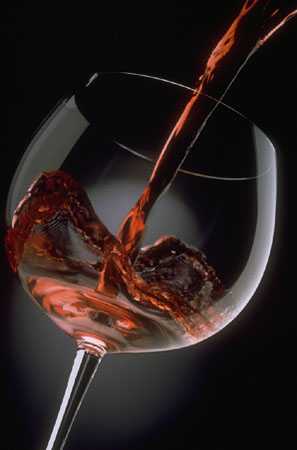
And all that was left was Amar, and her memory. And now when I sit here with my wine glass and think of her, there is a verse from Khayyam which comes to mind.

Alas, that Spring should vanish with the Rose!
That Youth's sweet-scented Manuscript should close!
The Nightingale that in the Branches sang,
Ah, whence, and whither flown again, who knows!

And that my friends, is the true story of Amar and Madhuri.

ps: While to me, she will always be Madhuri, I should probably disclose that you may also know her as the alphonso mango.

Sunday, April 23, 2006

Oskar Schindler and the ruby vintage


Oskar Schindler was the famous German factory owner who saved the lives of over 1,400 Jews during World War II. Thomas Kenneally wrote a book about him that won the Booker Prize, and Steven Spielberg made it into a movie - Schindler's List, which won him great critical acclaim and many awards, including the Oscar for Best Director and for Best Film.

My favourite scene in the film is where we are first introduced to Oskar. Watching it again recently, I noticed something I hadn't before - Oskar's expensive taste in wine. The relevant sequence is as follows:


At a restaurant ordering for his table (full of new friends he has made that evening), he asks the
maître d', "Tell me about your cellar."
The
maître d' says, "I have an excellent German Riesling. 1937."
But Oskar is unimpressed. "French. Bordeaux? Chateau Latour? 28? 29?" The
maître d' shrugs apologetically.
Spielberg cuts to another conversation at the table. Five seconds later, we return to Oskar.
"The Margaux 29? Burgundy then?
Romanée-Conti 1937?"

Oskar wants a French red wine, while he is being offered a German white. But he is not merely asking for a French red, he is asking for the most prestigious and expensive red wines in the world.

A bit of history. To decide what the best wines in the country were, the French introduced a rating system for wines in 1855 known as the Bordeaux Wine Official Classification. Wines were divided into five categories, the premier cru (first growth) representing the finest, and then downwards to the cinquieme cru (fifth growth). Only four red wines were given premier cru status, and the original list had not changed the evening Oskar ordered red wine at the restaurant. (The premier cru list has been only amended once, and that was when a fifth wine was added in 1973).

The four red wines awarded premier cru status in 1855 were:
1. Chateau Lafite-Rothschild
2. Chateau Latour
3. Chateau Margaux
4. Chateau Haut-Brion

Now we hear Oskar asking for Chateau Latour and Chateau Margaux. Since there is a gap of a few seconds in between, it is possible he asked for the others as well. It is in my view most likely that Schindler would have asked for the Haut-Brion, but not the Lafite-Rothschild. This is because the latter was, as indicated by the name, owned by the Rothschilds, a famous Jewish banking family. Given it was German Army officers he was entertaining, the Rothschild would have looked out of place and possibly objectionable on the dining table. This view [that Schindler would have not asked for the Rothschild] is somewhat supported by the fact that we don't actually hear him ask for it, though we hear him ask for 2 of the other 3 premier crus.

Finally, unable to get a premier cru, he asks for a Burgundy. The Burgundy region has its own distinct rating hierarchy for wines, and the Romanee-Conti, sure enough, rests at the top of this.

But the restaurant, not surprisingly, has none of these exclusive wines, and we do not know what Schindler eventually settles for. But we are plenty impressed by what he asks for.

Saturday, March 18, 2006

my milk carton small print reads...

allergy advice: contains milk

it better! it's a milk carton!

* * *

Wednesday, February 01, 2006

Top 10 European Culinary Recommendations

1. Il Gelato di San Crispino, Rome: ice-cream

If there's a heaven for ice-cream lovers, it must taste something like this. San Crispino is the finest ice-cream we have known. We lack food language, the only comparable words we can offer are :Jannat. Paradise. Heaven. Manna. So Believe!

More mundanely, the shop insists on natural flavours and ingredients, mostly fresh fruit sorbets, but their sorbets and ice-creams are also flavoured with nice things like nuts, honey, wine etc. Rome hails them as its finest, and the world salutes them too. Just look at the reviews they get.

New York Times says: Romans used to argue about which of a dozen or so wonderful gelaterias was the best in town. But since 1993 the contest has been for second place. Anyone who does not acknowledge that Il Gelato di San Crispino is supreme has not tried it. Gourmet magazine continued in a similar vein, but I have lost all my notes somewhere, so I can't quote you the relevant extract.

Our personal verdict is that the ice-cream is indeed deliciously fantastic. We tried it in three different seasons, we tried it for breakfast, dinner and dessert, all in the name of sacrifice and truth, and we can't wait to go back for more. You will find their shop lost somewhere in the maze of streets near the Trevi Fountain in Rome. Get the ice-cream first, then go and sit by the fountain. Because for mysterious reasons, there is no place to eat the ice-cream at the shop.

2. Berthillon, Paris: ice-cream

Okay, so I like ice-cream. It's my favorite food category. Anyway, Berthillon is a legend, a bona fide Parisien culinary institution. What that means is, they are very very good. I imagine that when cute little french children go to town on Sundays with their parents, they say Berthillon Berthillon instead of ice-cream. And then they go queue in line happily where Amelie is standing in front of them doing something silly. Oh okay, they probably go to McDonalds.

Anyway, Berthillon concentrate on fruit sorbets. They are definitely more fruit-centric than San Crispino. You will find them on Ile. Saint-Louis, the smaller of the two islands on the Seine in the heart of Paris. Watch out though - I counted six different shops labelled Berthillon on the approach from Ile de la Cite. Now they may all be selling the same stuff on franchise - I don't know - but accept no substitute. Head down the island's main street until you reach 31 rue Saint-Louis-en-l'île on your right. Enjoy.

3. Granjalla Pallaresa, Barcelona: hot chocolate with churros (biscuit)

I came across this place by accident. I was wandering around alone and lost (as usual) through the medieval quarter of Barcelona, when I saw a huge line of locals queued outside a cafe. I promptly joined the line, and then politely inquired what we were all standing in line for. Swiss Hot Chocolate with Chantilly Cream, and hot biscuits called Xurros to eat alongside. Mind you, once I got inside, I realised I needn't have asked. Everyone was eating and drinking the same thing. It reminded me of jolly dhabas and eateries I have known in Desh, with their giant pots and pans, the crowds the rush the chatter the frenetic pace of the waiters, the emphasis on a single culinary item perfected over time! I was in love. I struggled through the menu for a while, then gave up and pointed to what everyone was having. One of those please!

The chocolate was more decadent than anything I have known before. It was so rich, so thick, that in the end I ate it with a spoon. And yet, there were a surprisingly large number of beautiful young people eating/drinking the stuff. I can only assume they had fasted all week before. The food and drink are also remarkably inexpensive, another attribute more in common with those lovely eateries of Desh than those of Europe. The cafe will be recognisabe from the long line in front. It's on Petrixol, a street famous for its sweet-shops, in the medieval quarter of Barcelona, just off Las Ramblas, the city's main pedestrian street. And hey, turn down an empty glass.


4. LaDuree, Paris: Macarons

5. Abraxas, Amsterdam: Hash Milkshakes

6. Angelina, Paris: hot chocolate

7.

8.

9.

10.

hmmm...to be concluded

Monday, January 23, 2006

What do Adolf Hitler and Croissants have in common? (update)

They are both associated with other countries (Germany and France respectively), but they are both from Austria. In fact, the same city as well: Vienna.

Hitler did not become a German citizen until 1932, when he was 43. Croissants are a viennoiserie, though associated in everyone's mind with Paris/France (who can think of one without the other?). If you do in fact want a good authentic French bread, it is not the croissant you must turn to, but brioche. It is a deliciously sweet and soft bread, and you will not be disappointed.

Also you know when Marie Antoinette infamously said "If they don't have bread, let them all eat cake", and then got her head chopped off for her troubles? Actually she didn't say cake, she said they should eat brioche. So you see, a fine historical bread too.

While I am at it, I would like to note another historical food quotation -remmeber good looking smooth talking JF Kennedy in Berlin, height of cold war, and he expresses his solidarity with the city's population - "Ich Bin Ein Berliner"?

"I am a jelly doughnut." No wonder everyone cheered.

Wednesday, January 04, 2006

mango

It would seem we are not the only ones with such useless preoccupations as the names of mangoes.

Below is a letter from the Mughal emperor Aurangzeb to his son, taken from the Ruka’at=i=Alamgiri or Letters of Aurungzebe, translated by Jamshid Bilmoria. A bit surprised to realise Aurangzeb knew Sanskrit, wonder what literature he would have been reading in that language.

LETTER IX.

Exalted son, I was much pleased with the ‘dáli’ of mangoes sent by you to the old father. You have requested me to suggest names for the unknown mangoes. When you yourself are very clever, why do you give trouble to (your) old father? However I have named them ‘Sūdhá-ras’ and ‘Rasná-vilás’*.


*Sanskrit names given to two kinds of mangoes. Sàns. ‘Sūdhá=nectar and ‘ras’=juice; i.e. as sweet as nectar. Sans. ‘Rasna’=the tongue and ‘vilás’ pleasure; i.e. relishable to the palate. Here Aurungzebe shews his knowledge of Sanskrit.

Wednesday, September 28, 2005

the curious incident of the non-existent patatar

In Desh, the tomato is known as tamatar, so why isn't the potato called patatar? Why is it instead called aaloo? Didn't tomato and potato both originally come from South America? How then did the tomato manage to keep its original name, and how did the potato lose its? Why did people start calling the potato aaloo, did the word refer to something else once upon a time? If so, what? How and when did tomatoes and potatoes first arrive in the subcontinent, and how did they subsequently become so wide-spread? And what was our food like before their arrival, how was it different from what we eat today?

* * *

The potato (fancy name: solanum tuberosum) and the tomato (solanum lycopersicum) go back together a long way. In fact, I don't think I will be able to have fries with ketchup again without thinking of old friends, and missing them all terribly. For that is what the two are.

Look at the similarity for classification purposes: the two fall within the same kingdom, division, class, order, family and genus. They must have once had a common ancestor - the legendary and exotic potamato. And being from the same family, they share the same first name too.

Then there's the shared history and culture. Both were originally native to South and Central America, living happy indigeneous lifestyles. Then towards the end of the 15th century, the Spanish arrived. Clearly more impressed with tomatoes and potatoes than with the local population, they were soon exporting the plants back to the motherland as well as to other colonies around the world.

There is a suggestion that their spread in Asia was via the Philippines, a Spanish colony from the late 16th century onwards. Maybe they came to Desh via Spain's European neighbour Portugal. After all, the Portuguese had a permanent settlement in India by early 16th century, and they were also quick to follow the Spanish into South America (in breach of the inter caetera ). Some say it was the British. Maybe there were multiple introductions, by different people at different times and places. We do not know for certain.

The tomato and potato had probably reached Desh by the middle or late 16th century - when Desh was ruled by Akbar the Great. They may have subsequently changed our cuisine and our diet, but noone seems to have noticed their arrival. We have records of Portuguese missionaries, Persian artists and judges, Bilayati traders and merchants, but the humble tomato and potato seems to have entered Desh unrecorded.

***

The word tamatar comes from tomato. The Online Etymology Dictionary notes:

TOMATO: 1753, earlier tomate (1604), from Sp. tomate (1554) from Nahuatl tomatl "a tomato," lit. "the swelling fruit," from tomana "to swell." Spelling probably influenced by potato (1565). A member of the nightshade family, which all contain poisonous alkaloids.

Again the parallel history of the two plants is seen, with the idea that our spelling for tomato came from that of the potato. So how did we get to potato?

POTATO: 1565, from Sp. patata, from Carib (Haiti) batata "sweet potato." Sweet potatoes were first to be introduced to Europe; in cultivation in Spain by mid-16c.; in Virginia by 1648. Early 16c. Port. traders carried the crop to all their shipping ports and the sweet potato was quickly adopted from Africa to India and Java. The name later (1597) was extended to the common white potato, from Peru, which was at first (mistakenly) called Virginia potato, or, because at first it was of minor importance compared to the sweet potato, bastard potato.

Poisons and bastard potatos! Suitably impressed, we arrive at the modern words potato and tomato. The question I want to proceed to is the transformation of a potato into an aaloo. Why are the potatoes of Desh called Aaloo? I consulted the wonderful Hobson-Jobson:

ALOO (p. 16) , s. Skt. -- H. ālū. This word is now used in Hindustani and other dialects for the 'potato.' The original Skt. is said to mean the esculent root Arum campanulatum.

So aaloo comes from sanskrit then. A quick confirmation at the Monier-Williams Sanskrit dictionary :

ola
ola or olla mfn. wet, damp L.
• (am), n. Arum Campanulatum L.


Ola to Aaloo? Maybe. But what's Arum Campanulatum anyhow?

An illegitmate name is what, according to the international code of botanical nomenclature. How strange and mysterious. But this is a matter for another day, and I ignore this mystery of illegitimacy and continue ploughing.

A paper on the plant names of Nepal talks about the edible bulb of the Arum lily, or Arum campanulatum. This is apparently eaten as a paste in times of hardship. So we seem to have an edible flower from Desh, which would wrap things up nicely, except isn't a bulb not a root! Sigh.

Hindunet's Saraswati Sindhu Civlization (?!) page has a dictionary which seems to say it is a kind of yam:

2063.Arum campanulatum: ce_n-ai amorphophallus campanulatus (Ta.); ce_na yam, arum campanulatum (Ma.); ke_ne tahiti arrowroot, an itchy root (Ka.); ke_n a kind of yam, arum campanulatum [amorphophallus campanutalus = arum campanulatum](DEDR 2022). Amorphophallus campanulatus: arsaghna (Skt.); jungli suran (M.); ol (B.); zaminkand (H.); karnaikilangu (Ta.); kanda (Te.); chena (Ma.); tuber: stomachic, tonic, restorative, carminative, in piles and dysentery, when fresh acts as an acrid stimulant and expectorant and much used in acute rheumatism (GIMP, p.16).


However, there is not much other information to be found, the reason seeming to be that arum was a 19th century misclassification and whatever it referred to is now going under a different name. So we are trying to work out what aaloo used to be, and all we know is it was arum so we must return to the mystery I was trying to avoid, and find out what arum campanulatum is and what has became of it.

arum campanulatum turns up on a plant database page about a somewhat dirty sounding group of plants - the "amorphophallus". We hit the jackpot right away:

Amorphophallus paeoniifolius (Dennst.) Nicolson var. campanulatus (Decne.) Sivad.

SYNONYM(S) : Amorphophallus campanulatus Blume, Amorphophallus campanulatus Decne., Amorphophallus campanulatus Roxb., Amorphophallus rex Prain, Arum campanulatum Roxb., nom. illeg.

ENGLISH : Elephant-yam, Leopard palm, Stanley's washtub, Telinga-potato, White-spotted giant arum.

NEPALESE : Ole (as A. campanulatus).


And here, at last, is the answer we have been looking for all along. The original aaloo of Desh was in fact the elephant yam. Native to the sub-continent, the elephant yam is still known as Ole in Nepal. When the potato first arrived in Desh, its appearance reminded locals of the elephant yam they were familiar with, and they started calling the potato aaloo. Cue to the present, where the potato has become so popular with us that we have long forgotten the original aaloo, its very name and identity lost to the parvenu from the Americas.

***

Aaloo: A Hindutva Perspective?

What horror. Foreign vegetables have arrived and taken the names and identitity of our native vegetables! Further, the potatoes are reproducing so heavily that they have taken over as the most populous vegetable, while elephant yams have become a minority in their own country. And did we mention the native vegetables had the name aaloo first! Historical injustices must be corrected, the potato must give up its claim on the name aaloo if it wants to stay in Desh!


***

Fortunately, in real life the hindu loony brigade are still unaware of the potato's controversial history. The same seems to be the case for their muslim counterparts:

Ubedullah Khan Azmi, a member of Parliament, and secretary of the Muslim Personal Law Conference, said: "It was the believers in the Qur'an who taught you the graces of life, taught you how to eat and drink. All you had before us were tomatoes and potatoes. What did you have? We brought jasmine, we brought frangipani. We gave the Taj Mahal, we gave the Red Fort. India was made India by us."


Arrival of Islam in subcontinent? Early 8th century. Arrival of tomatoes and potatoes? Late 16th century. Tsk tsk, these sophisticated rhetoricians intoxicated by the exuberance of their own verbosity! He should have instead said "what did they have before us? Zero!" It would have pleased him equally and he would have also been technically correct. And we could then have saluted the Desi ancients who thought up this remarkable metaphysical concept, which also describes so well Mr Azmi's knowledge of history. Zero.

***

Sunday, September 04, 2005

On Food

Food is an often overlooked part of our identity. When we think of who we are, we talk of nationality, religion, community, caste, sect, ethnicity. But what of food!

When a Punjabi overseas hears of makki di roti and sarson da saag does his heart not hearken for his native land? In university, when we grumbled about lecturers from Sonar Bangla, did fish not figure prominently in the nicknames and rude verse we created? And then later, would I not discover that when some Bengalis proudly assert their identity, they use the same phrase those mocking them did, and say: "we are fish-eaters!"

Do most Muslims I know not have a dietary obsession, where injunctions concerning drugs, alcohol, modesty, sexual propriety - all can be ignored, but the one great taboo is Pork? And in Desh, has not beef-eating conversely become almost an article of faith, the right to eat cow being one of the reasons put forward to necessitate division of countries and people!

Our Tibetan neighbours do not identify membership of their community on the basis of language, or religion, though we may think so. For them, the answer to who is a Tibetan is this: A tibetan is one who eats tsampa (roasted barley flour). When the imperialist Han Chinese invaded, they too followed the idea of identity by diet, asserting the superiority of rice-eaters over tsampa-eaters. And in occupied Tibet today, that's how identity and communities are divided, by what is served at the dinner table. Food matters.

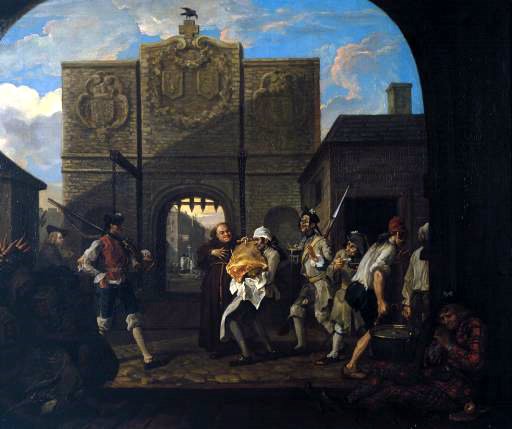
Over here in Europe, the French contemptously refer to the English as les rosbifs - the roastbeef. If the name's meant to give offense, then it's a dismal failure. The men tasked with guarding the the Crown Jewels (yes, yes, including the kohinoor, the mountain of light, which Desis tend to get so excited about) are famously known as the beefeaters. And one of the proudest statements of English identity comes from the patriotic artist William Hogarth, whose most famous work was known as - quite appropriately - The Roast Beef of Old England.


This entertaining painting is set in France, and it shows on one hand, snivelling and scrawny French soldiers, subsisting on meager offerings like watery soup - and on the other, the substantial and nutritious diet of the lads of Blighty, who feast on fine Roast Beef.

Sequel to this to follow, maybe.

Thursday, August 25, 2005

Alfonso, the Shehenshah

If mango is the king of fruits, then alphonso must be the shehenshah, the king of kings. Here is the finest fruit of the nation, integral part of our culture and heritage, one of our great treasures and delights, and it's got the name of a portuguese villain? In the proud land of indigenous naming and renaming - of rajiv chowk and indira gandhi international hawai adda and sanjay gandhi national park and jawaharlal nehru university, why has the local alphonso mango not been given a heroic desi name?

Instead it continues to flaunt a bastard colonial imperialist name! (apologies to all desi brothers named alfonso, but the mango is not named after you now, is it!) Oh history is confusing and noone seems to know for sure how the luscious alfonso started being called that, but the dastardly portuguese clearly had a hand, and the most famous alfonso in indian history (and quite possibly the source of the mango name) was the vicious murderer and torturerer Alfonso d'Albuqerque, who used to entertain himself by cutting of ears and tongues of desi brothers and sisters and sowing on those of dogs in their place, a bastard and villain if ever there was one!

How then can our sweet and pure mango be an alfonso? A name change is in order. And yet, not a wrinkly politican or freedom fighter please. Mahatma Gandhi Mango hardly rolls off the tongue, and such a name is more likely to spoil our appetite than anything else. It is therefore my suggestion that henceforth alphonso mango be known as madhuri mango, after our beloved madhuri who is beautiful and sweet and loved by all indians, whose name rhymes so beautifully with mango, and who is much renowned for what desis from the great sanskrit poets of antiquity down to your local taxi driver like to compare with their favourite fruit - yes, mangoes!

Down with imperialist foreign villains! Hail the Madhuri Mango!

mango mango


"the fragrance from your mango groves makes me wild with joy."

Rabindranath Tagore, Amar Sonar Bangla

I have been thinking about mangoes. Of the mangoes of Desh, golden and juicy, sweet to taste and intoxicating to smell, oh manna from heaven ! The western world is full of mango heathen, eating the insipid south american version of the fruit readily available in their so called "supermarkets", bland and tasteless when compared to the fragrant and richly flavoured mangoes of Desh! I have tried to educate the people of Blighty, to help them repent the errors of their ways, to show them the path of redemption and truth, but the mango heathen continue to prefer their false mangoes! Never mind, more mangoes for you and me!

In recent days I kept feasting away on mangoes, and Akbar kept asking me if it made me itchy. Laughing at his old-wives tales, I would not accept any criticism of my fair mangoes. Then yesterday I read that mangoes belong to the same family of plants (sumac) as poison-ivy. Why have I been feeling itchy and uncomfortable ever since???

Mango is the beloved fruit of the whole sub-continent, finding pride of place in the Bangladesh national anthem, official appointment as the national fruit of India, and...and..Pakistan. Pakistan's love is much more subtle. In the nation where Islamic parties have condemned as unislamic everything local from wearing red at weddings, to kite-flying and spring festivals - noone has raised a word against the mango, inspite of no evidence of the Prophet ever enjoying the same!

However, what interests me is the Alphonso and its status in India. More on that next time.

Monday, June 27, 2005

The Great Salmon made kipper a metaphor for england. A challenge for the newcomer, posing previously unknown difficulties that must be overcome to succeed. Kipper is a boney fish that's difficult to eat, it smells of hell and tastes of salt, and it stinks up the inside of your mouth. I ordered it with foolish confidence, intoxicated insane and believing against all evidence in the possiblity of success. Naturally I end up defeated, lost, beaten, the plate still full and stomache still empty, with a mouthful of bones that look like a cat's whiskers (thin, long, white). Days later, I can still feel a fish bone stuck in my throat, constantly poking me from the inside, refusing to go away. Good metaphor, you satanic bastard.

Thursday, May 19, 2005


Sharing cake with friends Posted by Hello

Friday, April 01, 2005

Funny English


Pork Faggots Posted by Hello

How do they come up with these names? I come across Mrs Hoare, Mr Death, Mrs Trollope, even a Mr Childharmer.

I imagine when they meet for dinner, they all feast on mr brain's pork faggots, and then round things off with spotted dick.

Lovely.


Yum Yum Posted by Hello